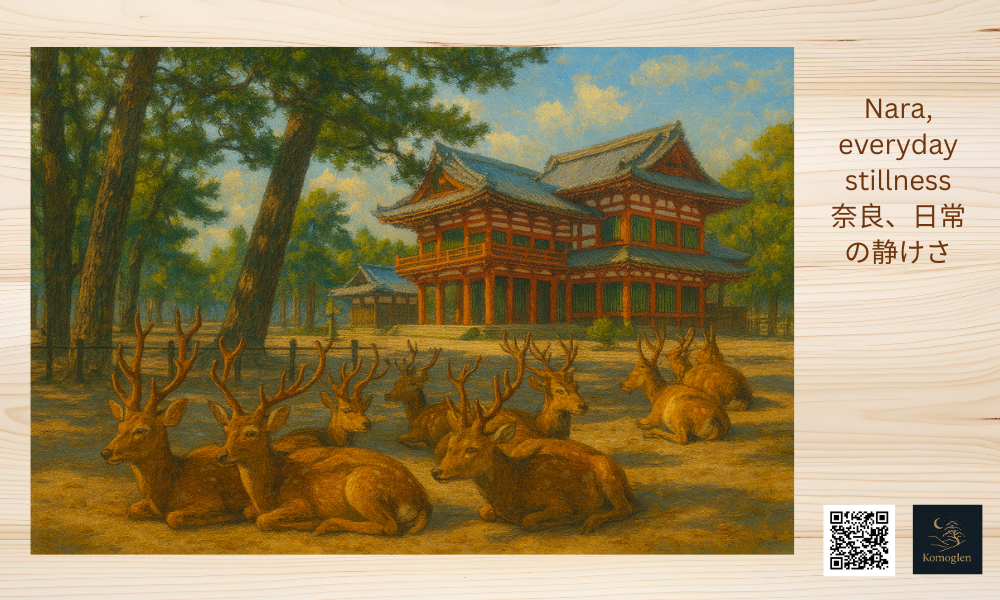
Komoglen = A hidden, gentle space where light still reaches you. A quiet place of identity, reflection, and natural rhythm. A place for becoming. A word that holds the quiet space between who you are and who you’re about to be.
Who This App is For
This app is for people becoming more of who they truly are – with strength, purpose, and heart.
For girls with big feelings and bigger dreams
For boys who are still learning how strong they already are and can be
For students growing into confident adults and business professionals
For young women who are ready to trust their own path
For mothers who give their all with love and grit but need a little me time
For professionals creating their own version of success and who need a little support in doing so
And more!
How does our app fit into your life?
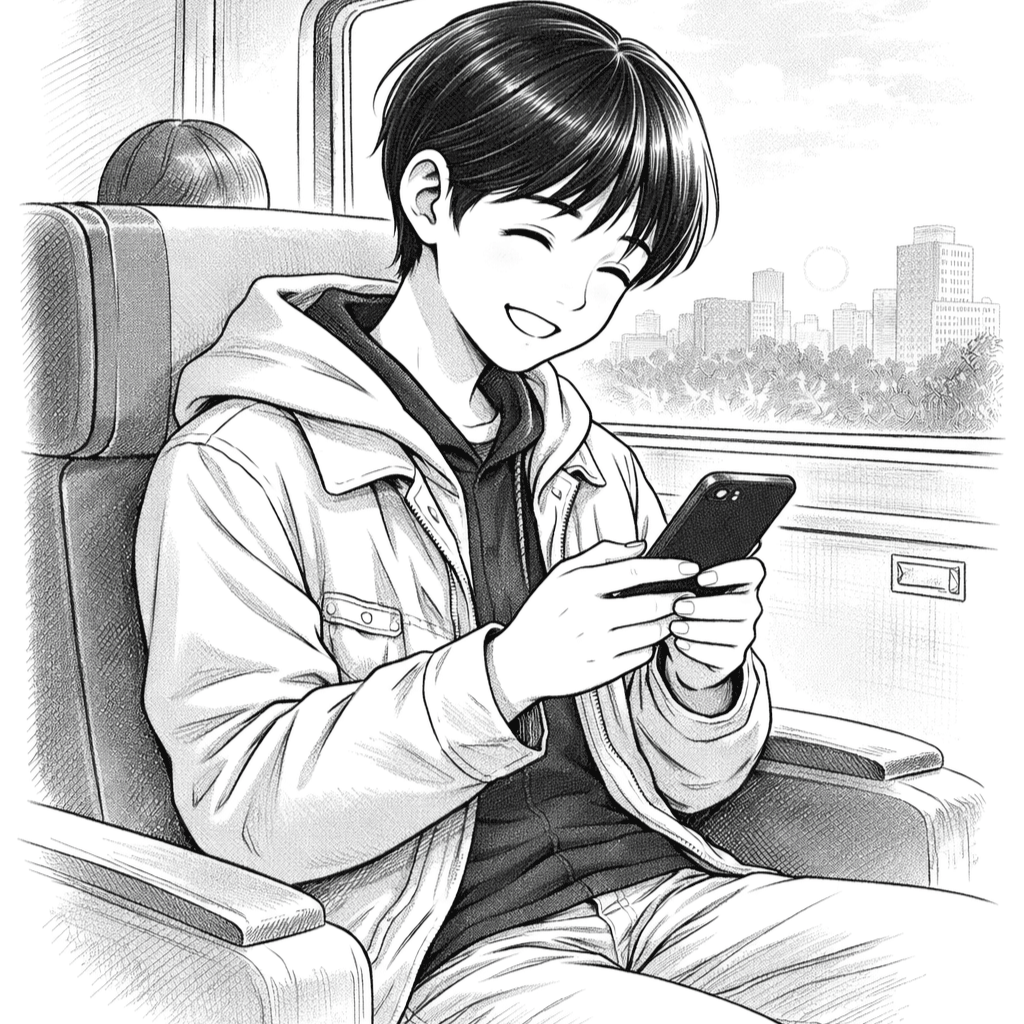
On the train, when you want to start the day in the right way
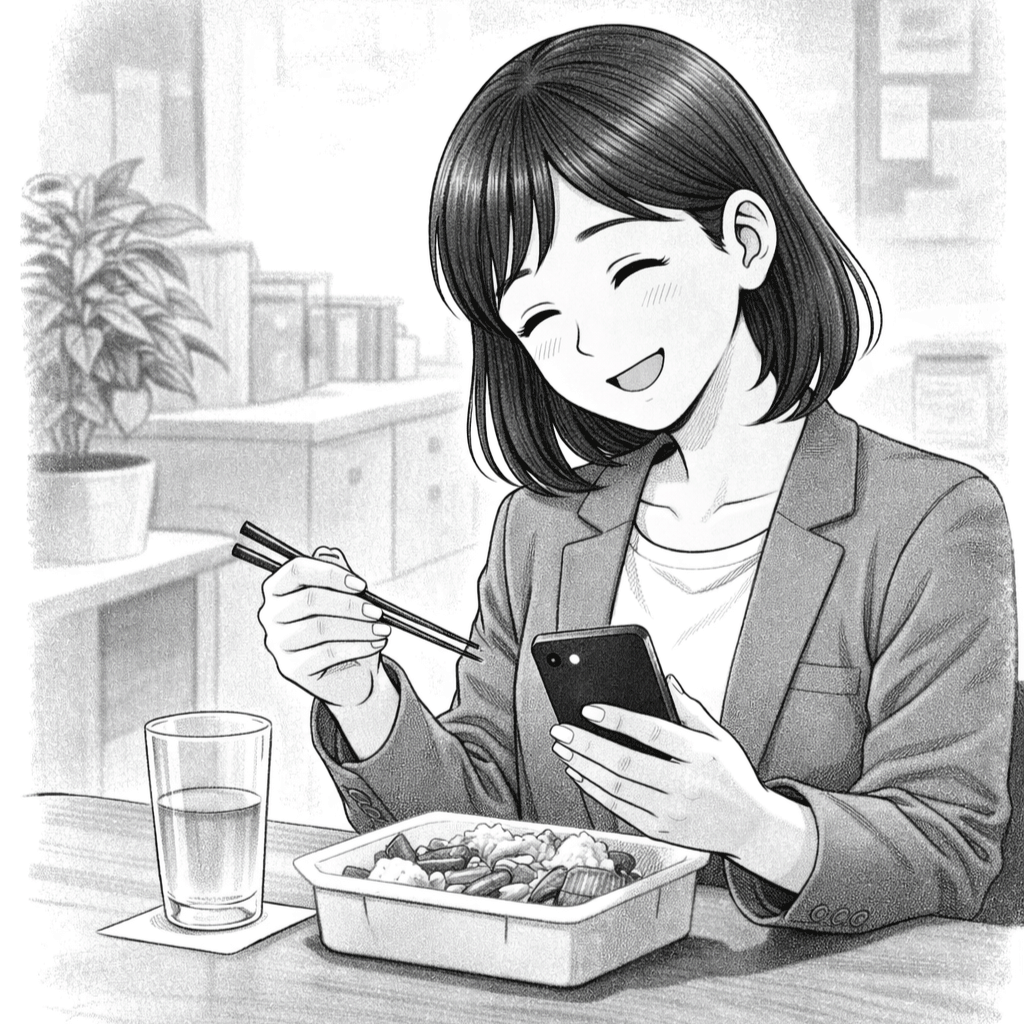
During lunch, when you are casually looking for something light to read
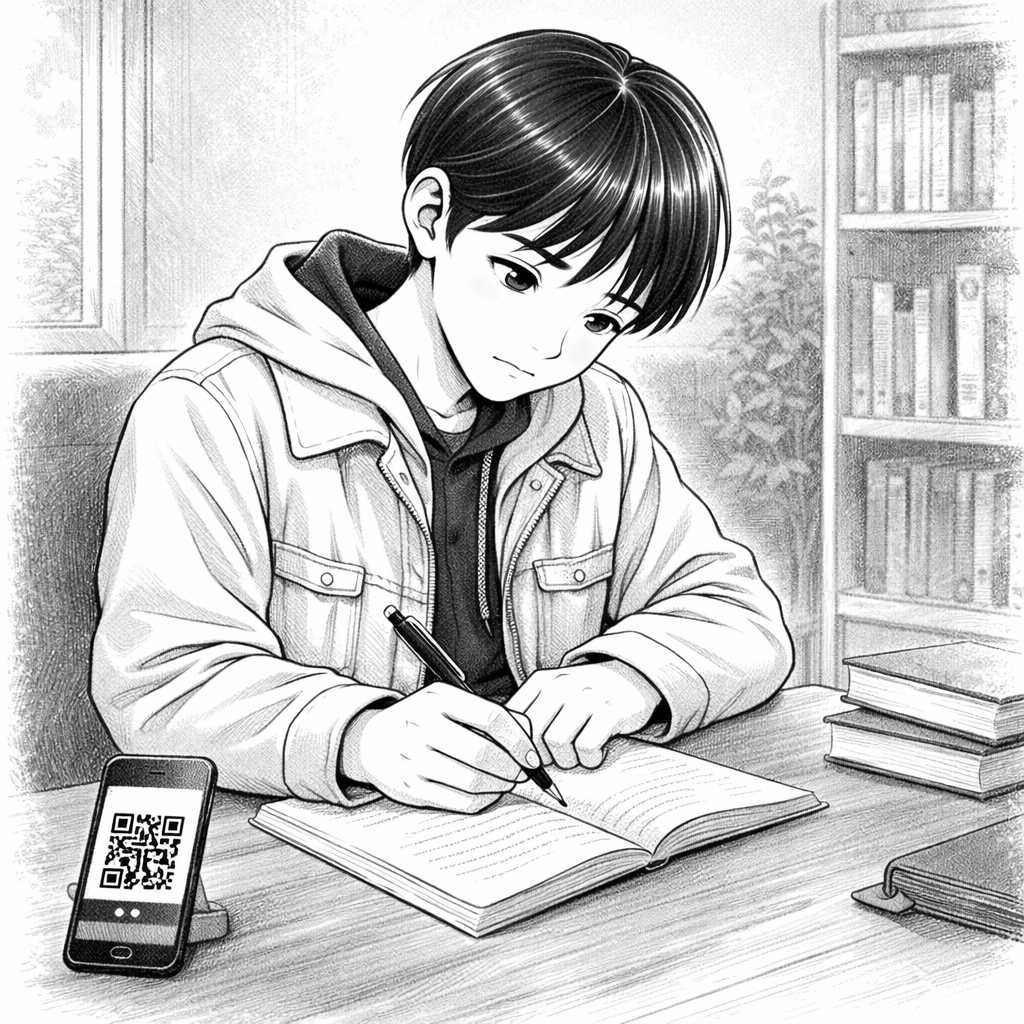
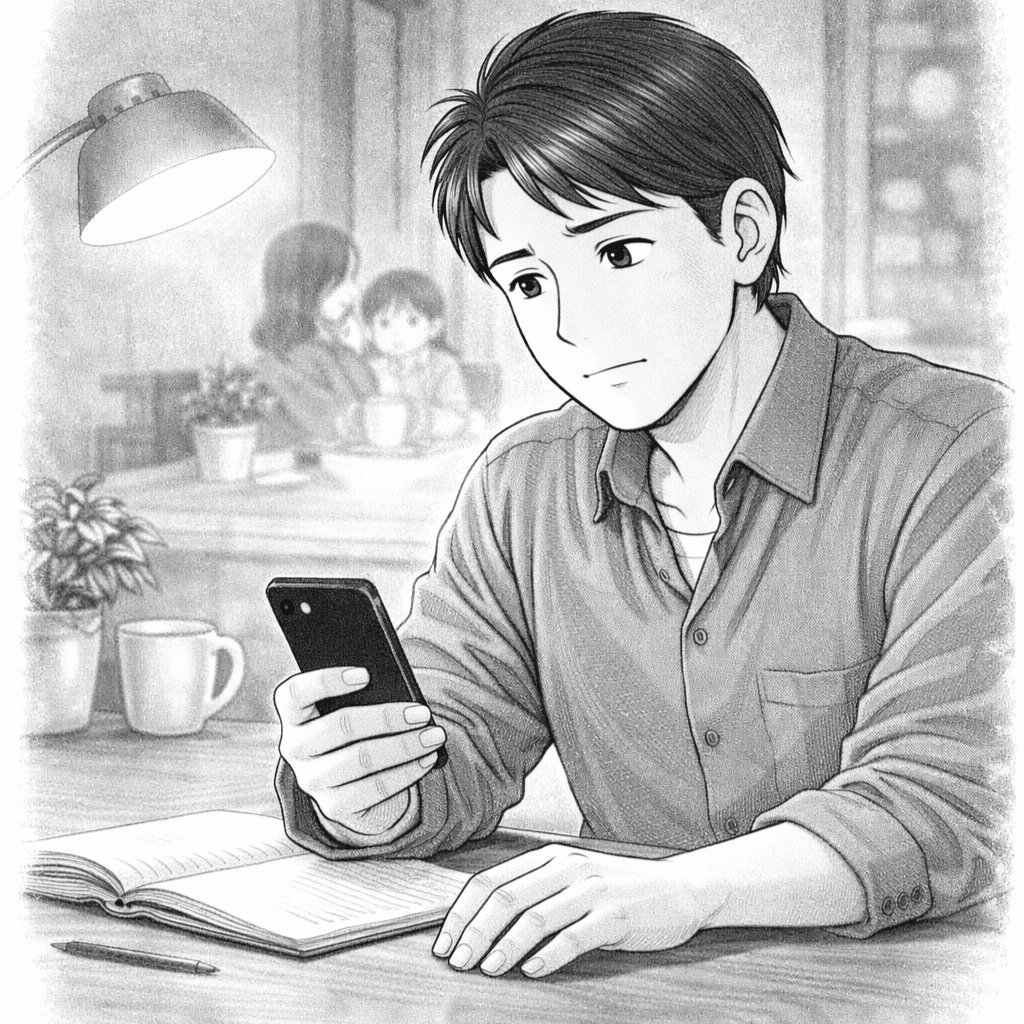
When studying
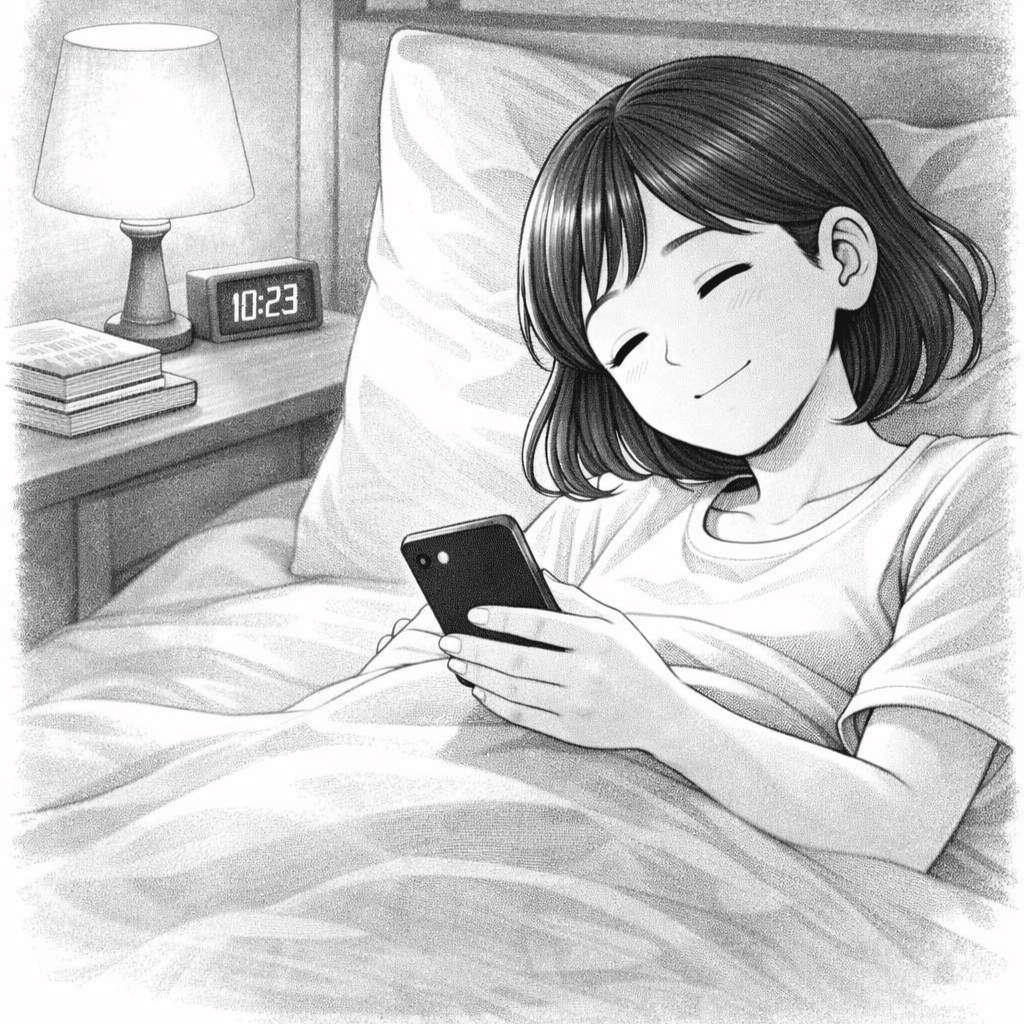
In the quiet moment before going to sleep
When a small life issue comes up and you want a few calm, practical strategies to think it through
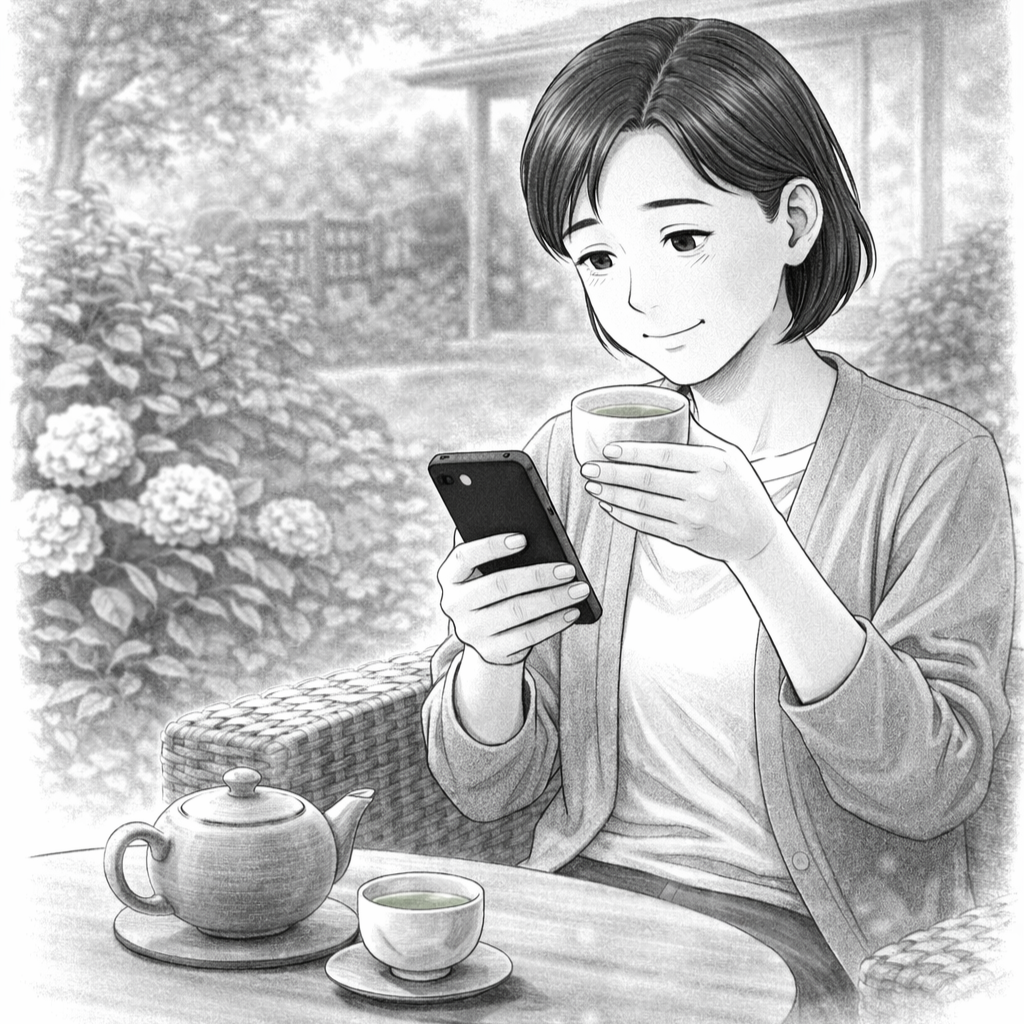
When you are retired and enjoy quiet moments that keep you thinking
Komoglen is not something you need to remember or manage. It fits into these small, everyday gaps, becoming a familiar pause that naturally finds its place in your day.
How is Komoglen different from chatting with AI?
Komoglen is designed to avoid the risks that can come with open-ended AI chat. AI conversations can become addictive, overwhelming, or subtly shape how people think by constantly responding, reframing, or encouraging dependency. Komoglen does not simulate companionship or continuous dialogue. It has clear limits. The physical cards create natural stopping points, and the QR content is short and finite. This reduces overstimulation, avoids emotional reliance, and keeps reflection grounded in the real world, supporting calm, independent thinking rather than ongoing engagement.
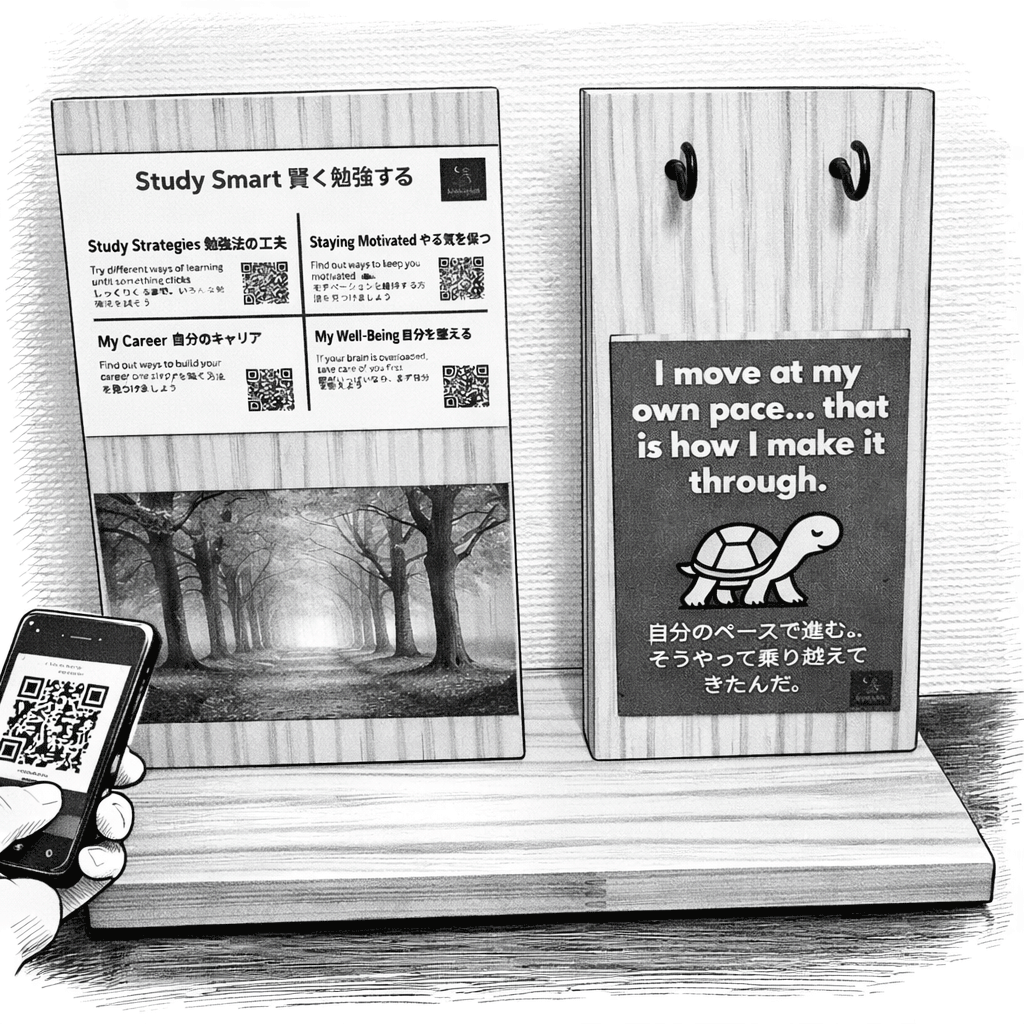
We also offer wooden card holders and card sets.
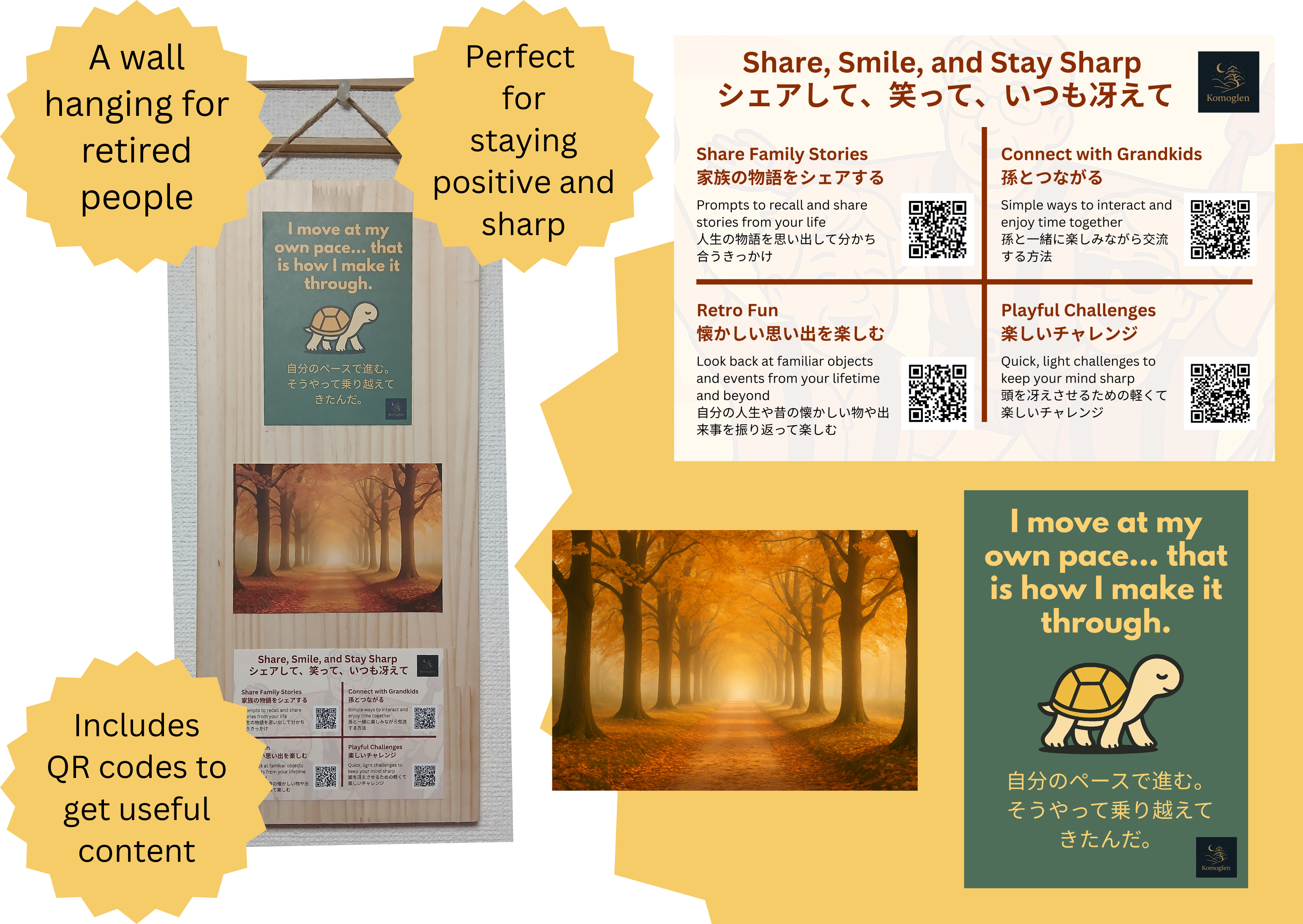
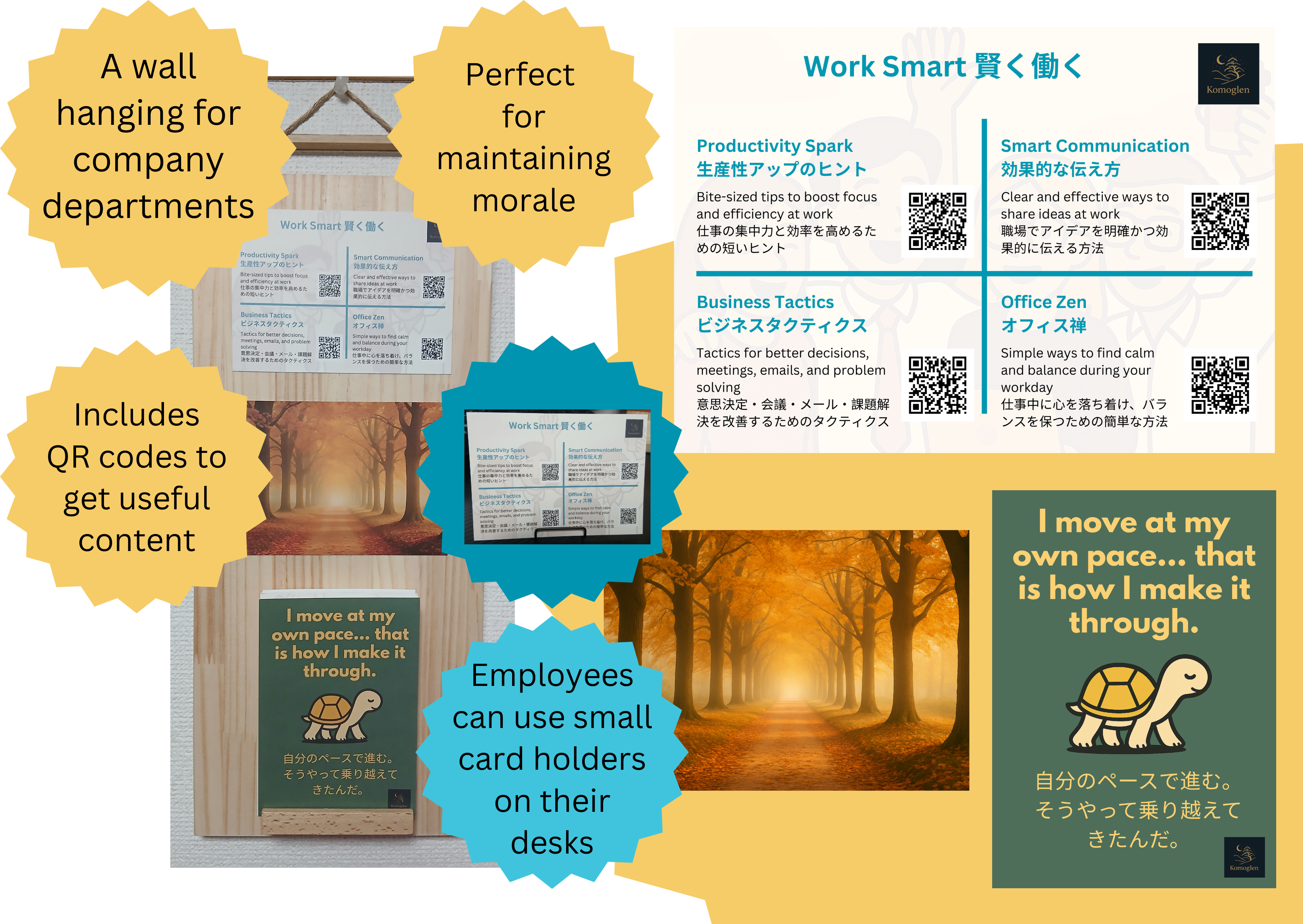
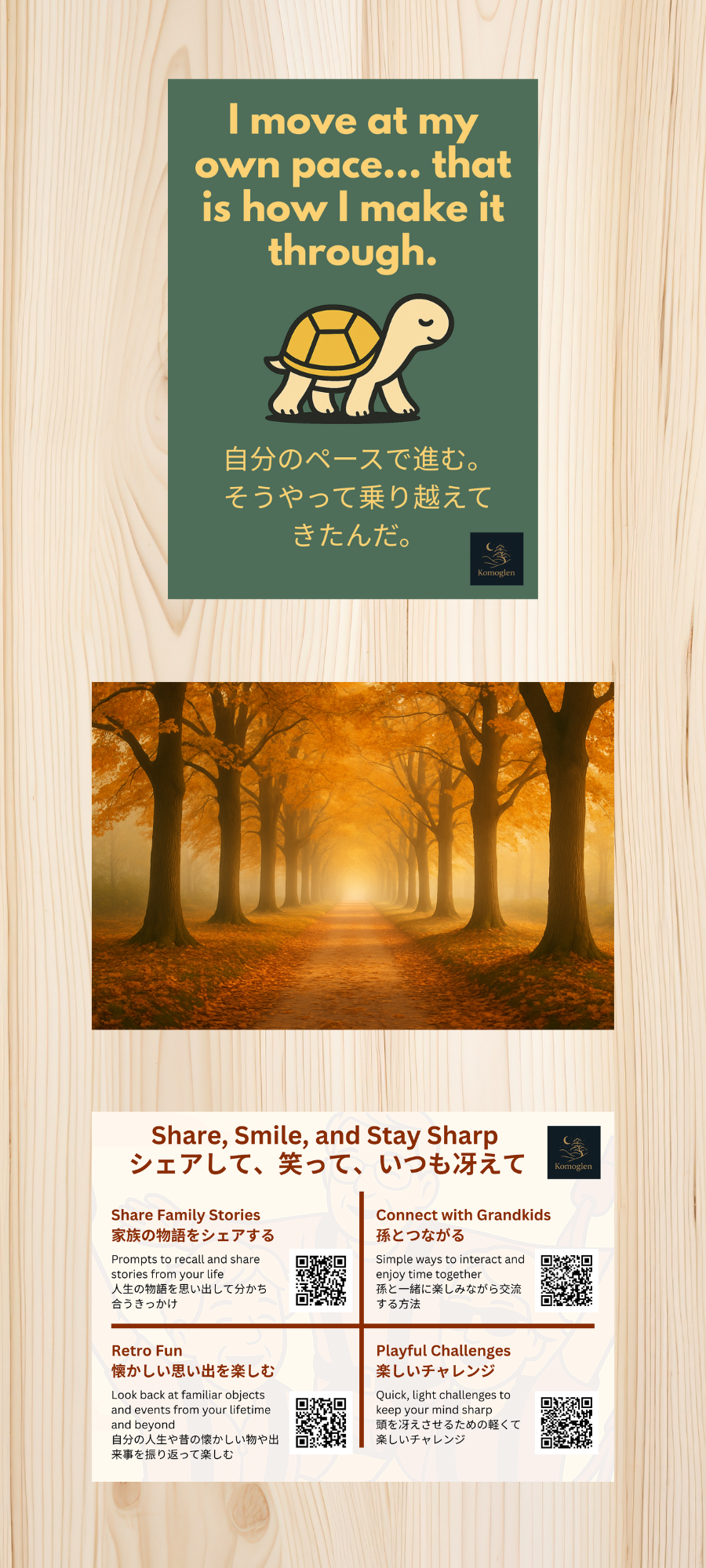
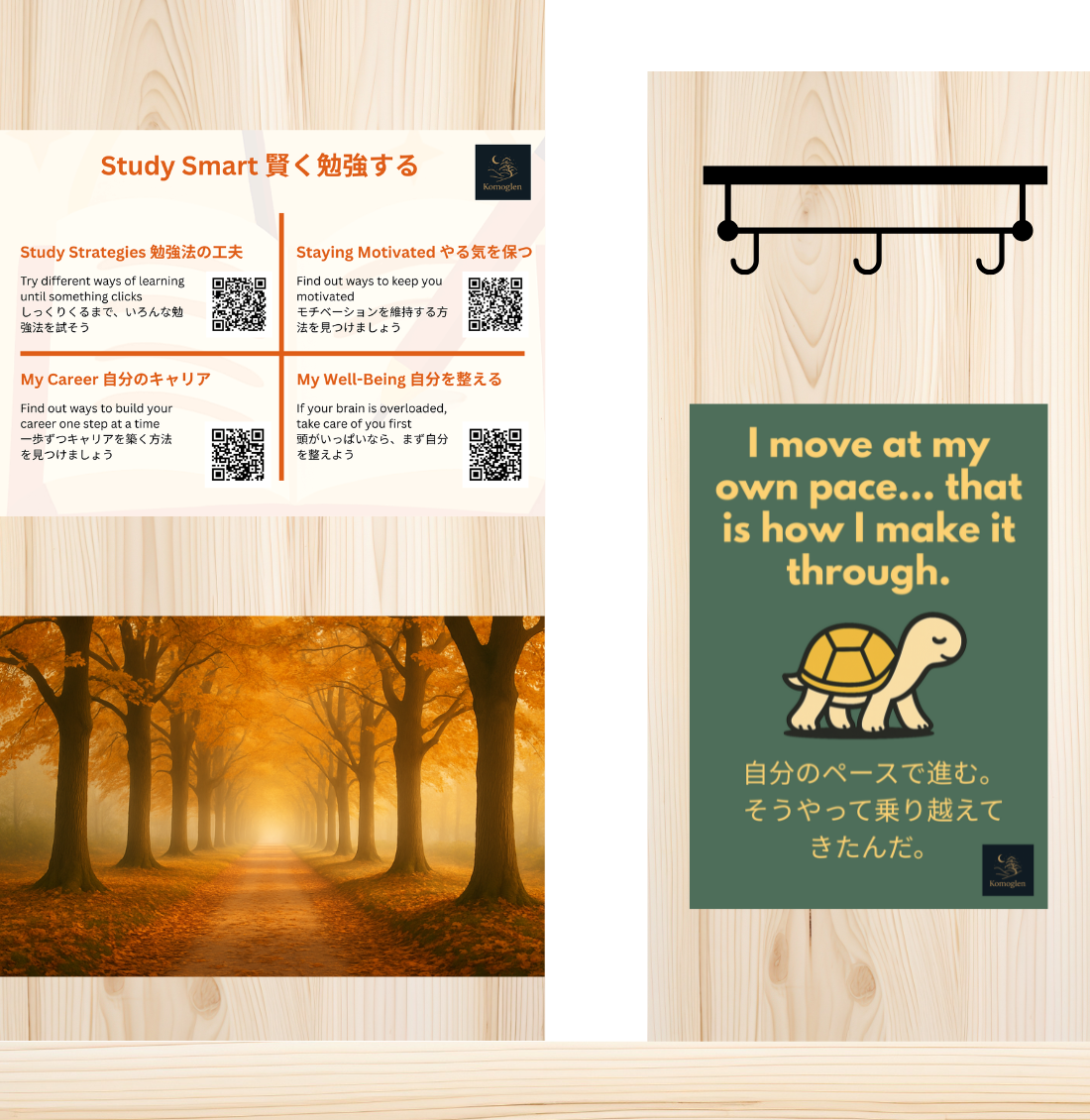
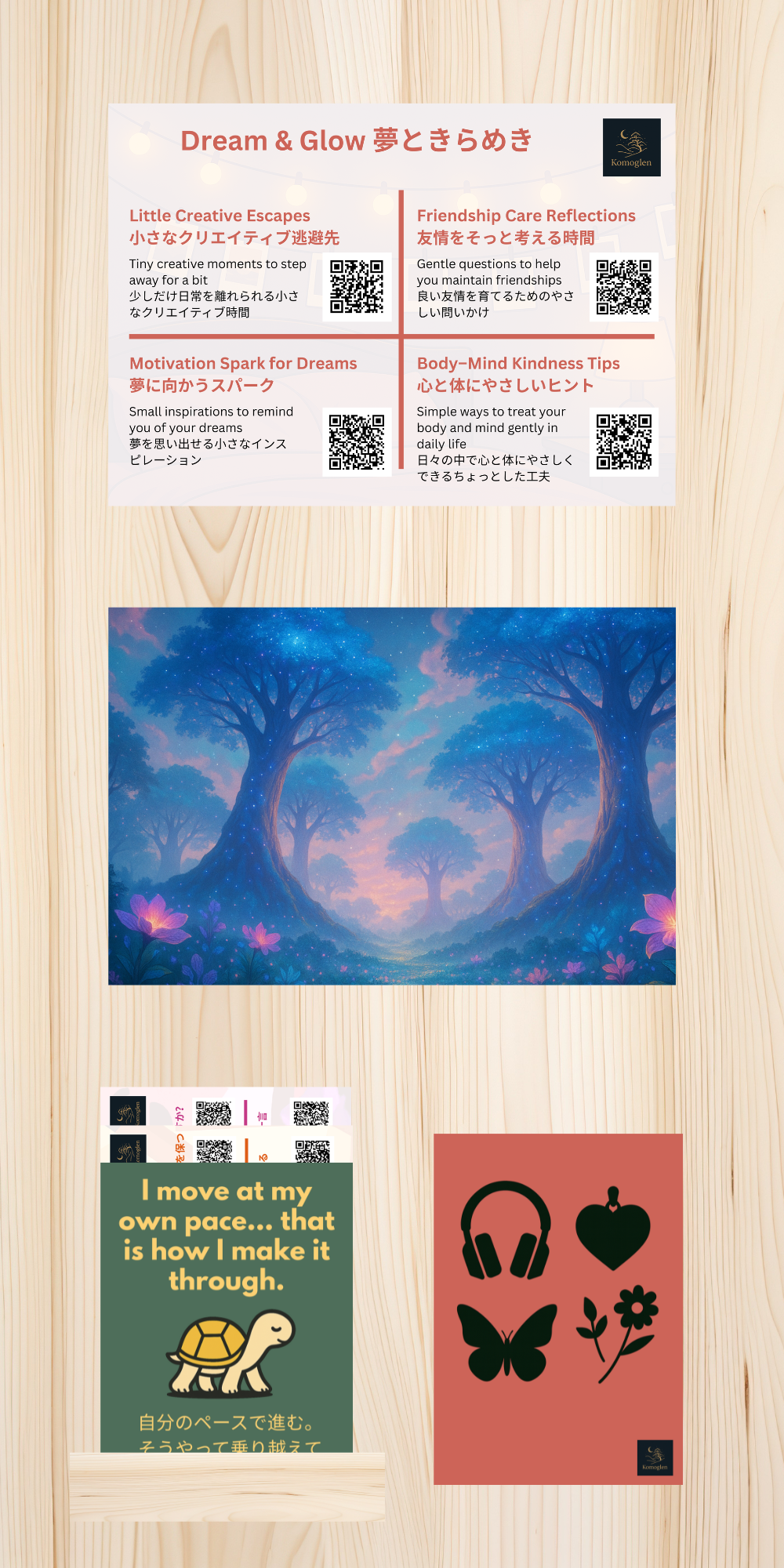
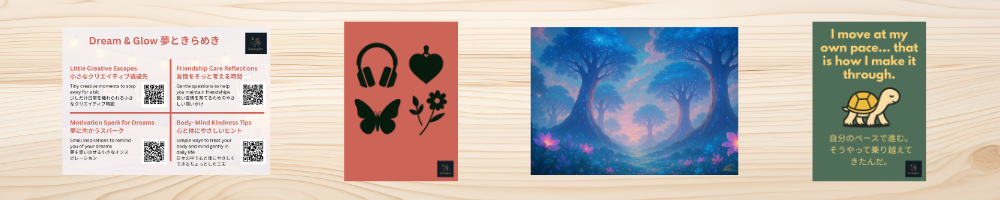
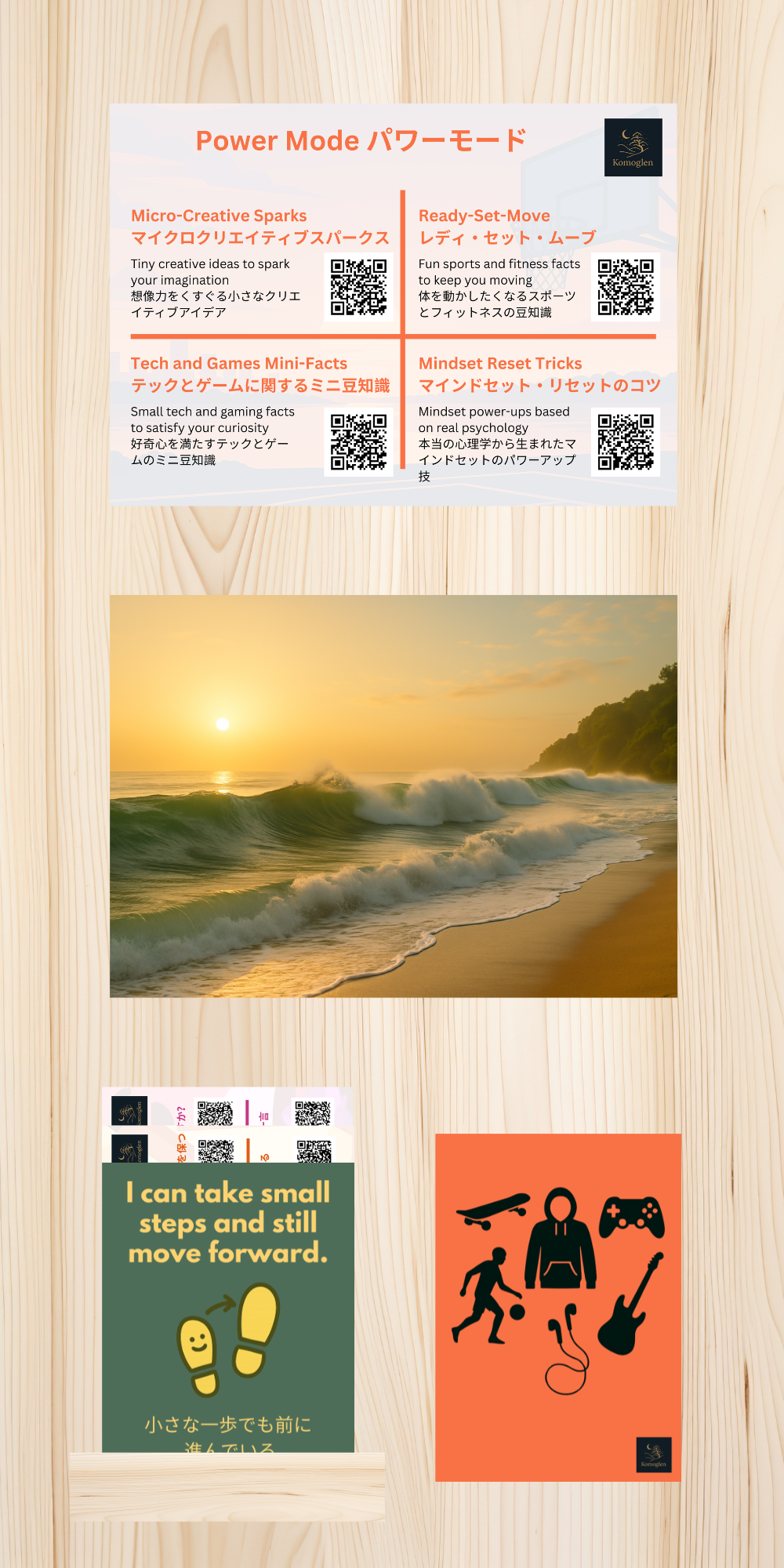
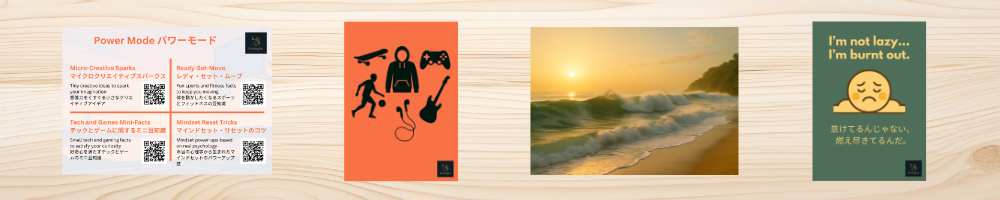
We make card holders for teens, students, working adults, retired people and grandparents. Here are two examples:
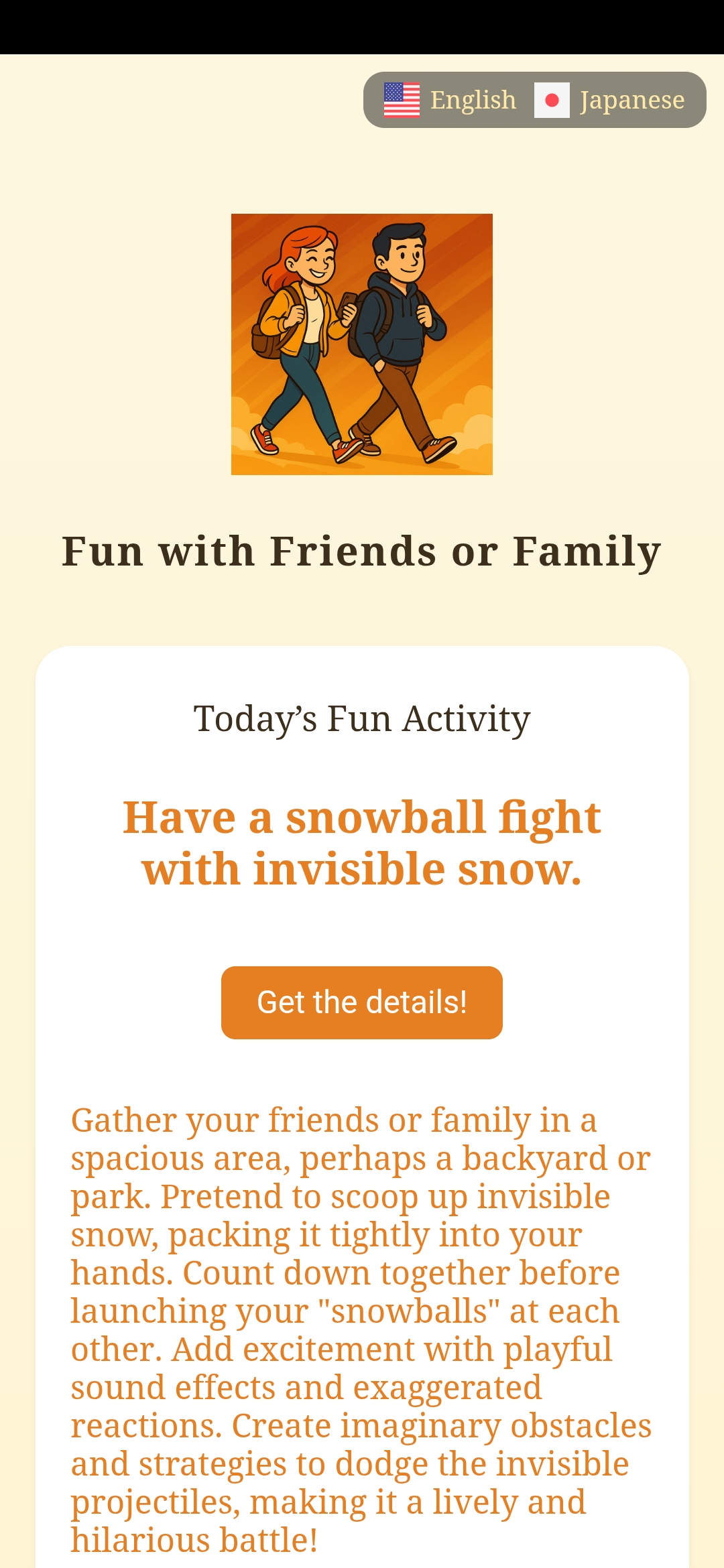
You scan the QR codes with your phone's camera to get a variety of engaging and/or useful content.
✓
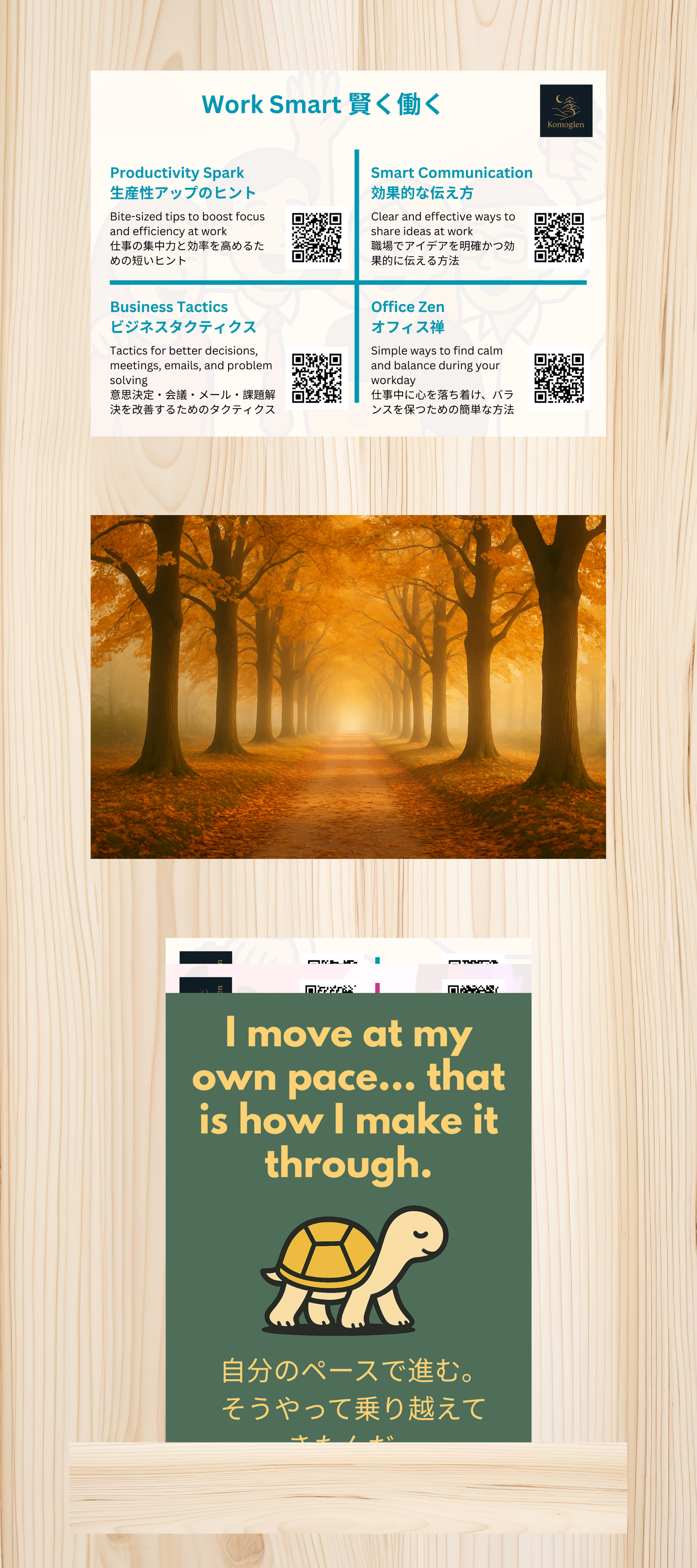
Offers a calm, culturally grounded visual anchor inspired by Japan
✓
Encourages quiet reflection and mental rest without instruction or obligation
✓
Adds warmth, beauty, and seasonal awareness to everyday spaces
✓
Suitable for homes, offices, care spaces, and shared public areas
✓
Easy to live with and appreciate over time without becoming visual noise
Please note that the real-world realization of the designs above may vary depending on supply availability, and the cards are not removable from the wood.
We make the wooden card holders using the following cards:
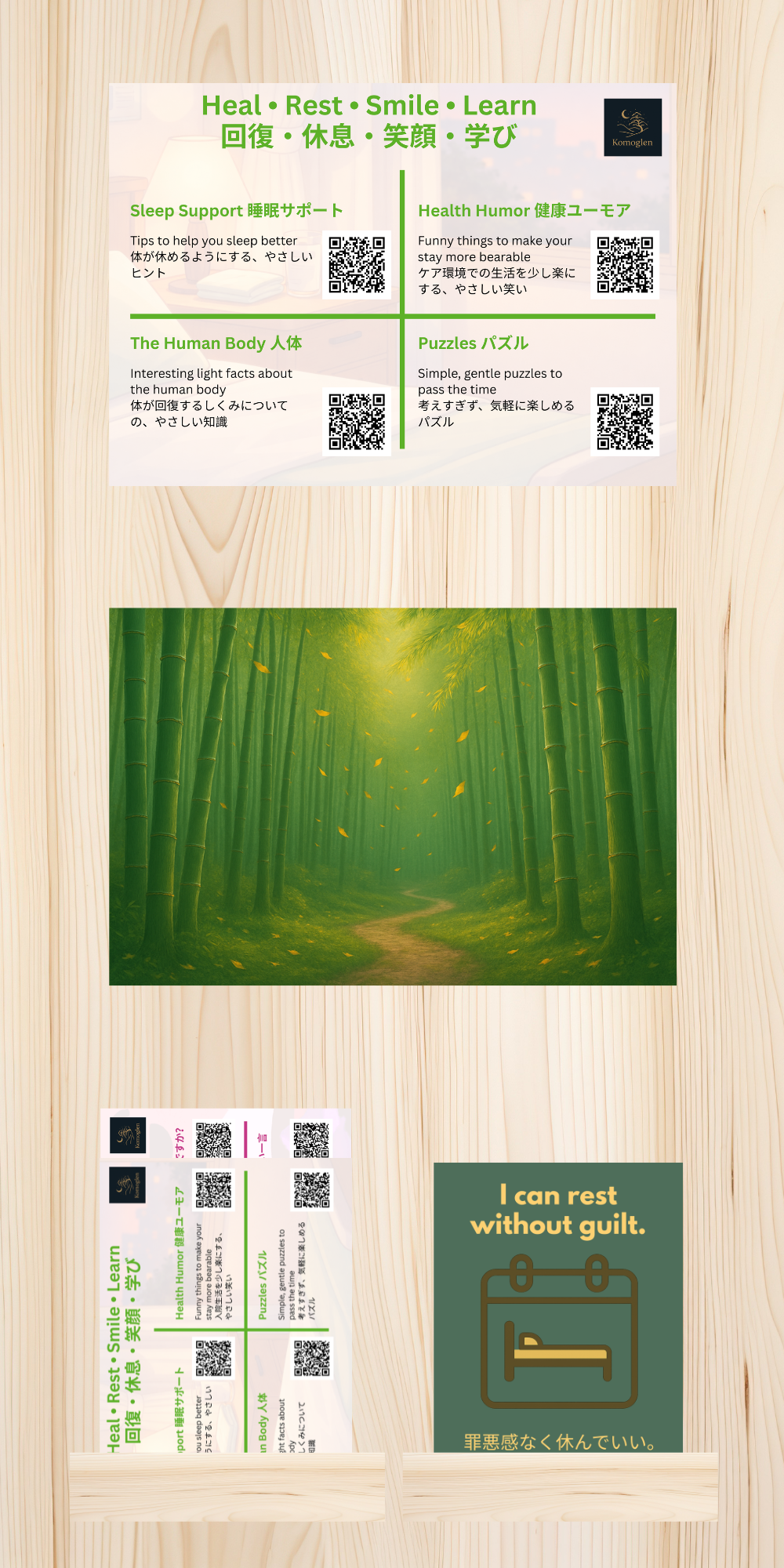
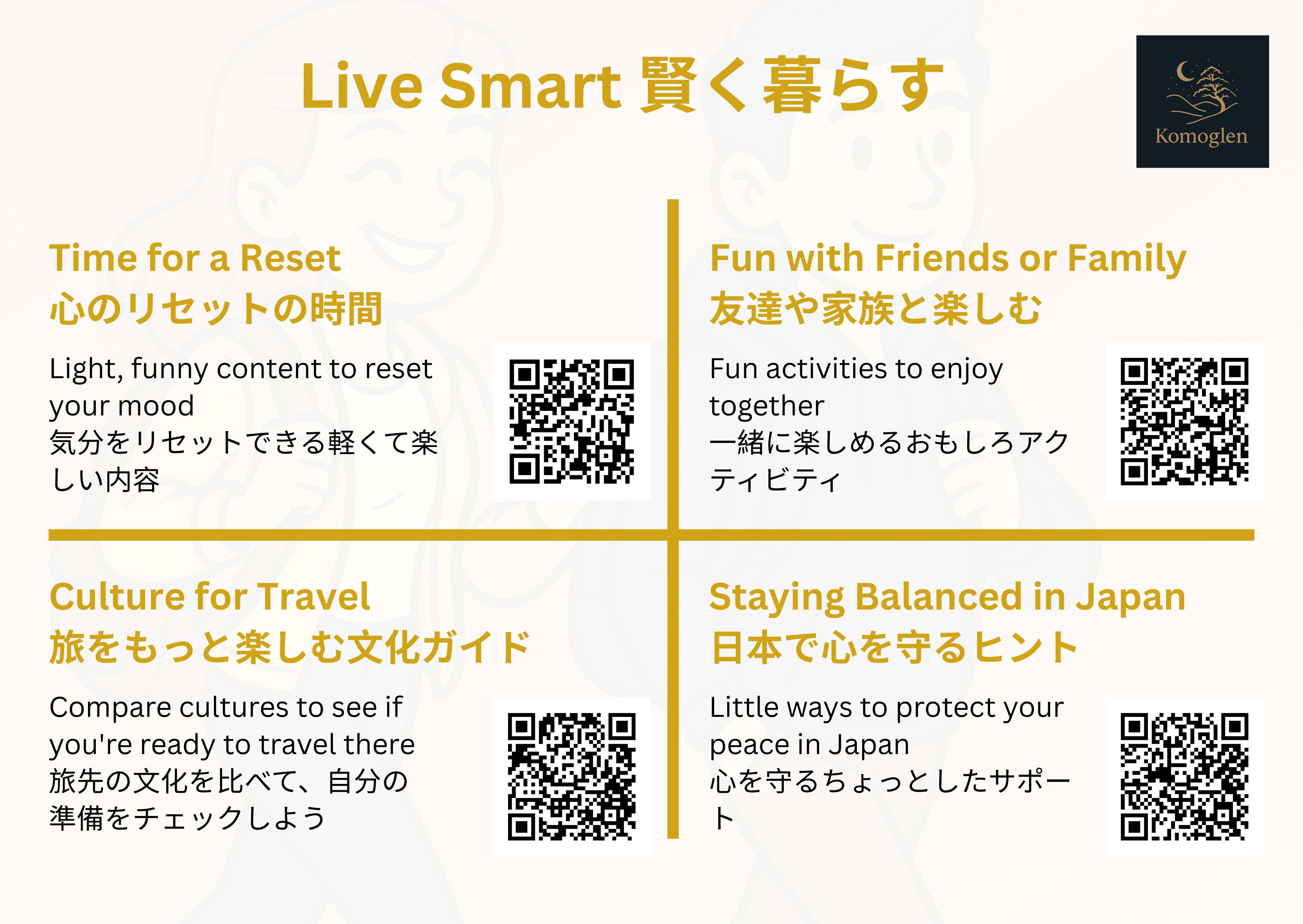
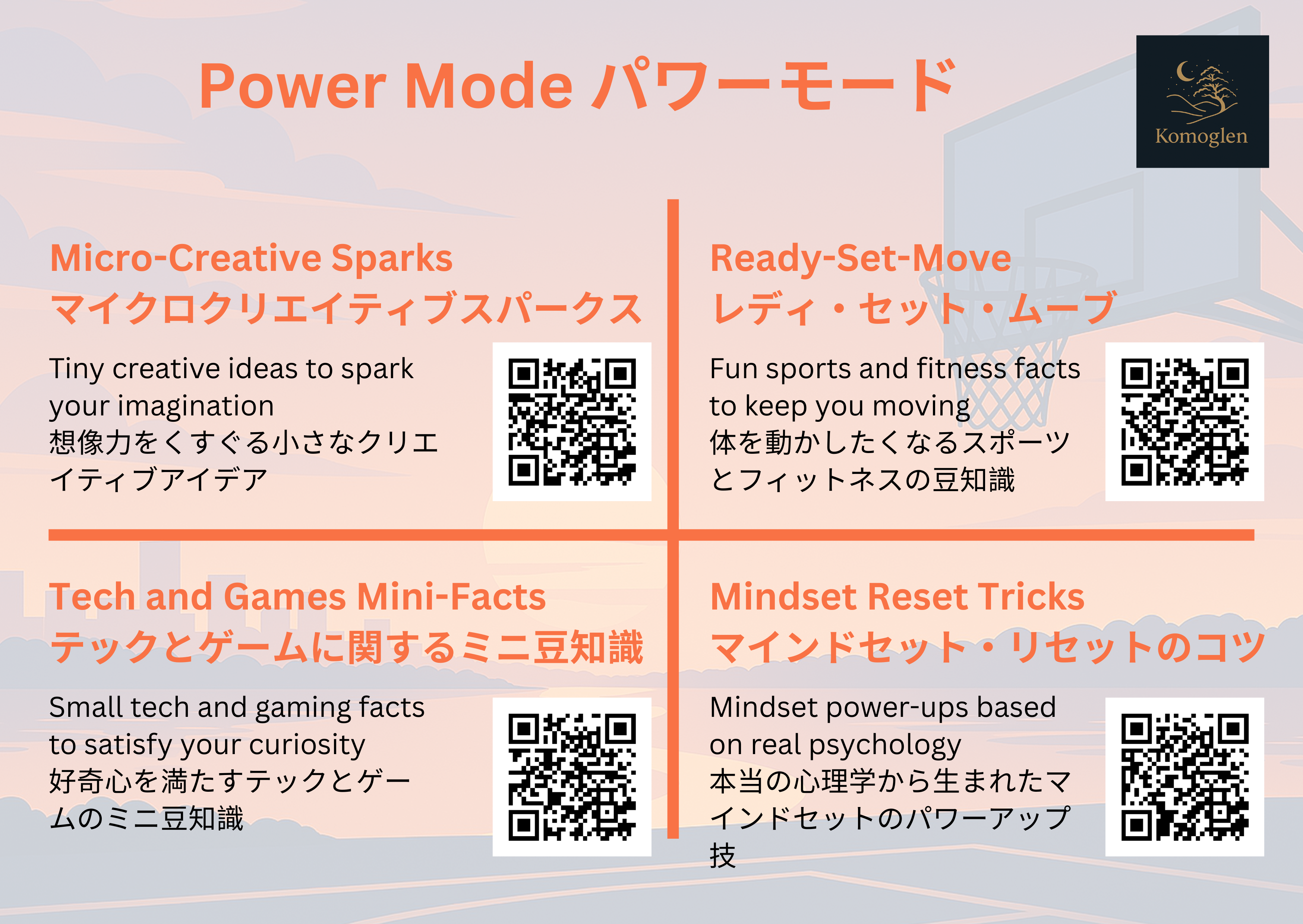
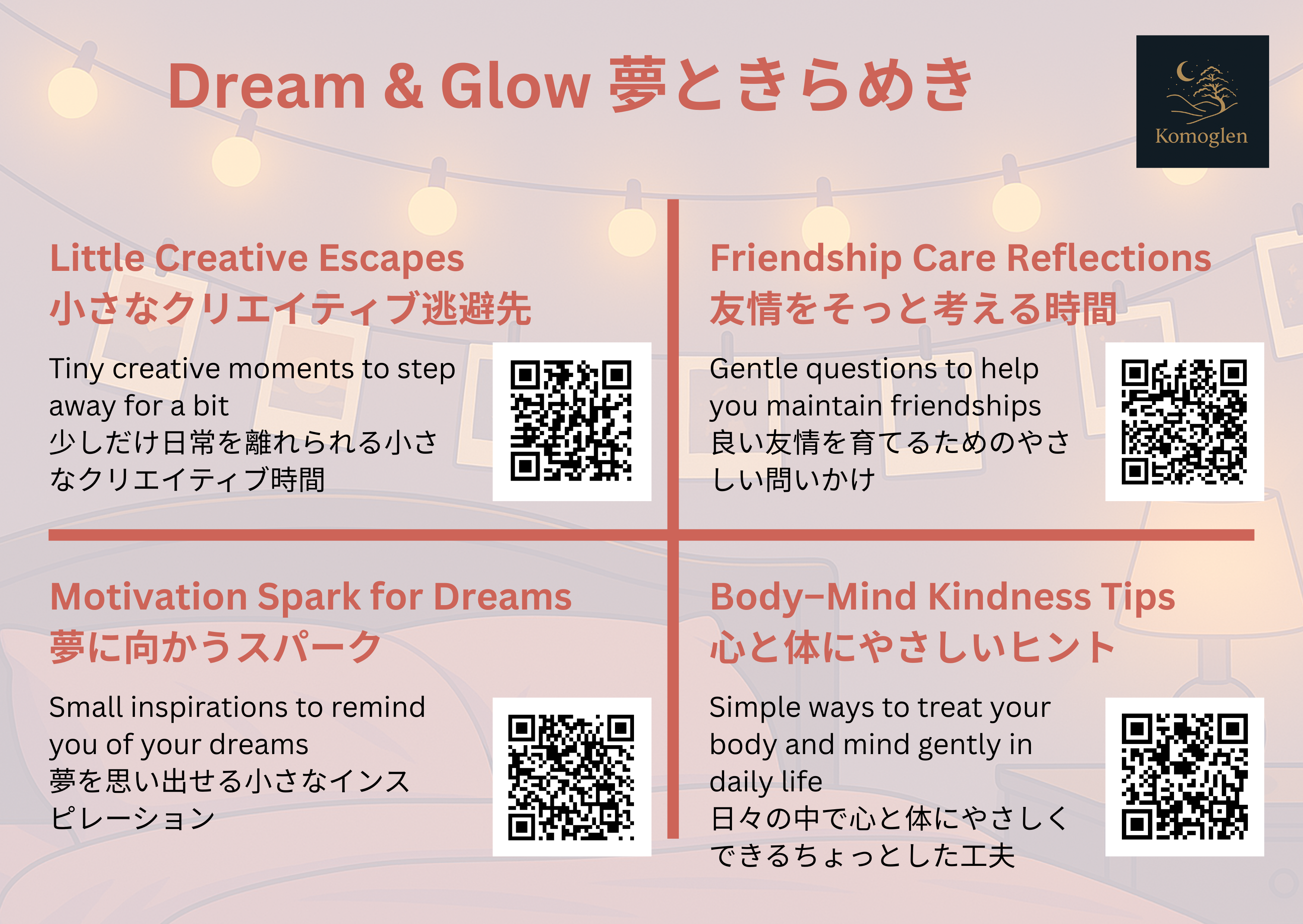
A card to access content that aims to support your life and make it fun
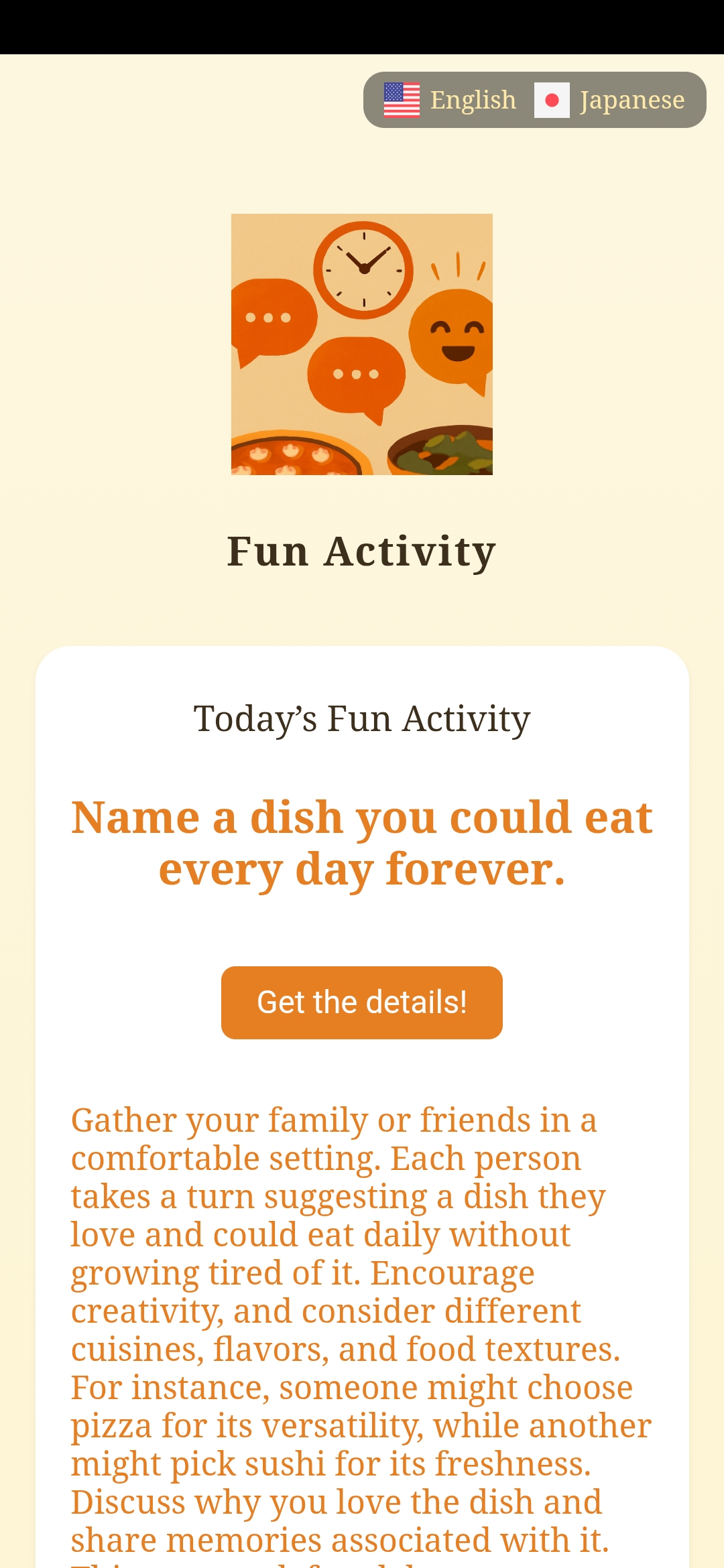
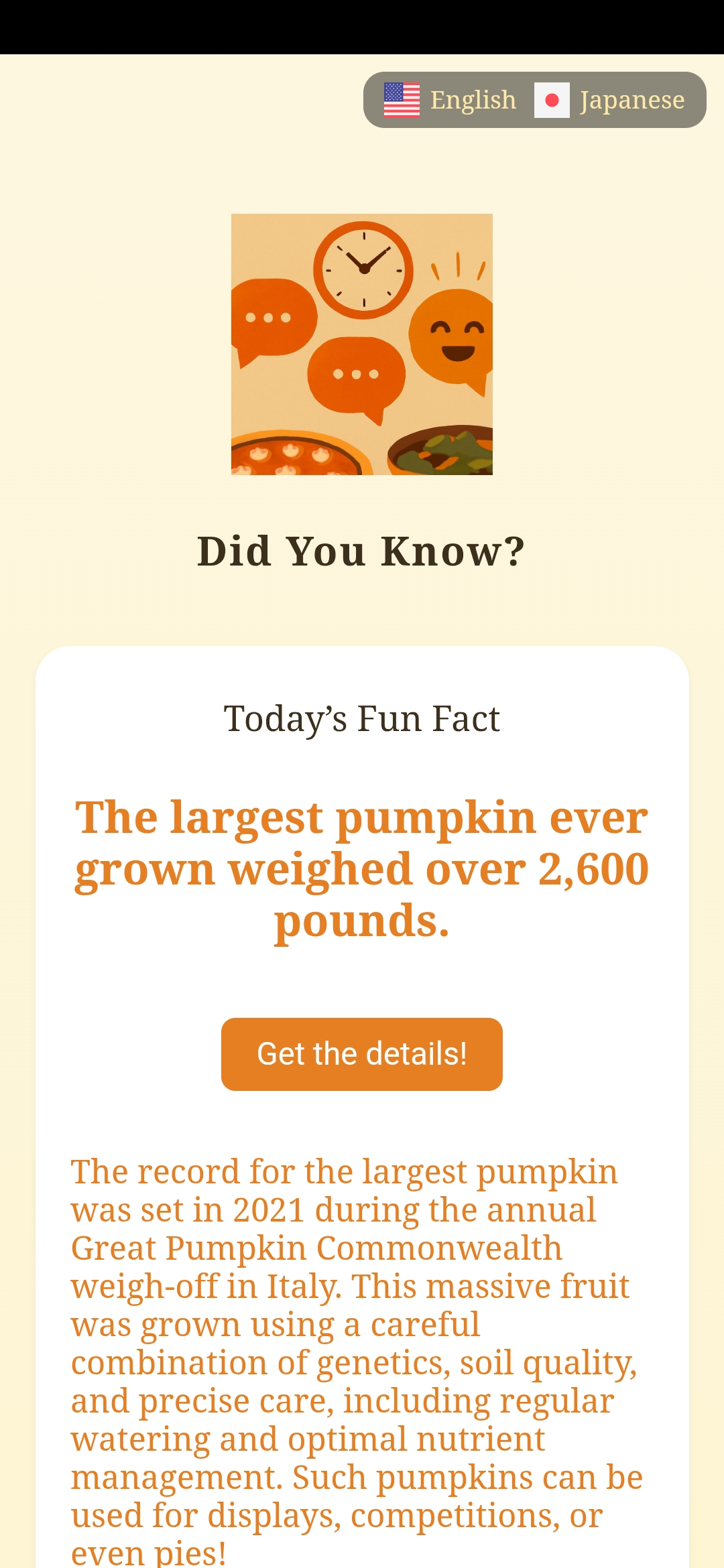
(Try this now - click on the card below and then use your phone's camera to scan the QR to access the content...)
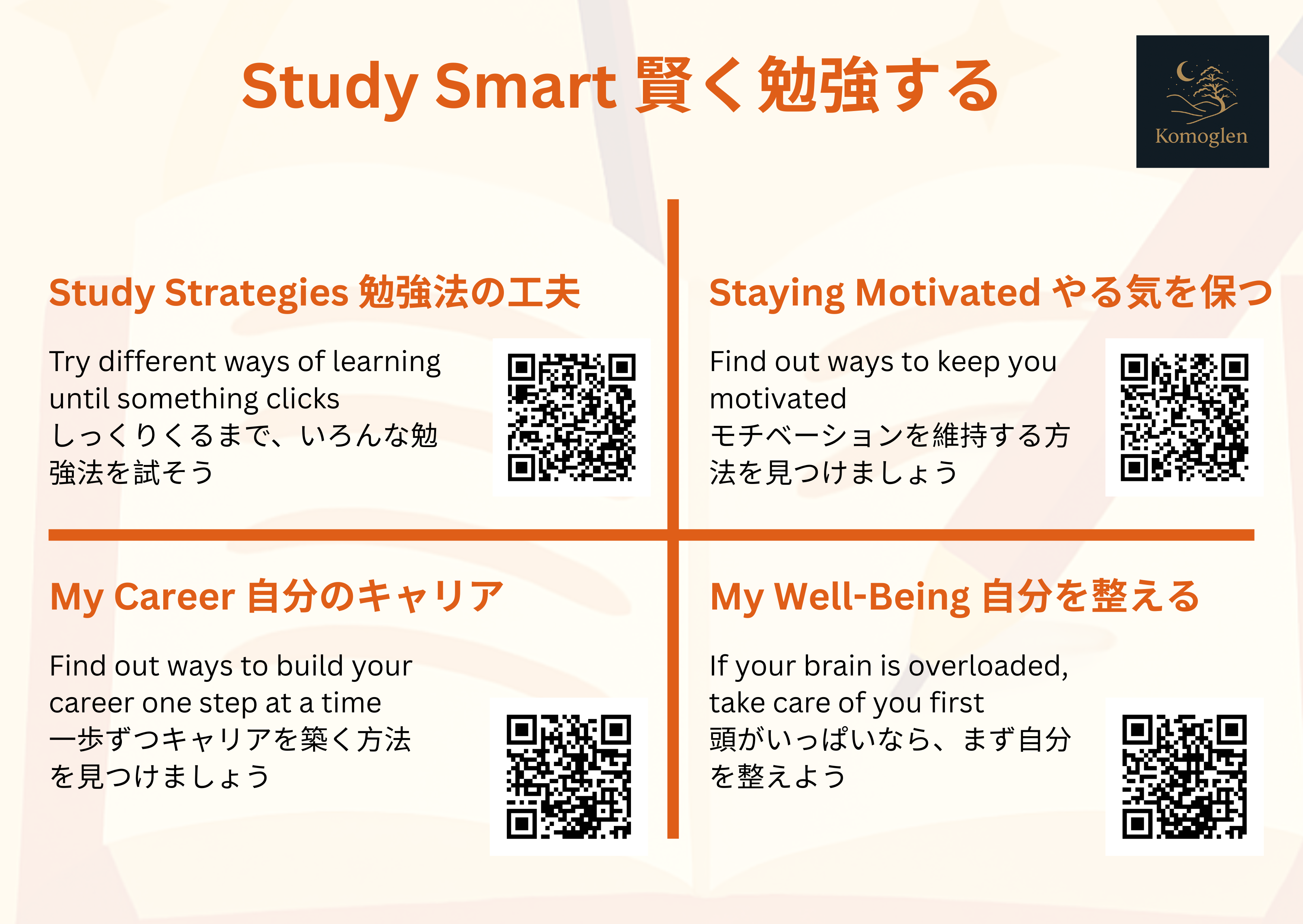
A card to access content that aims to support student life
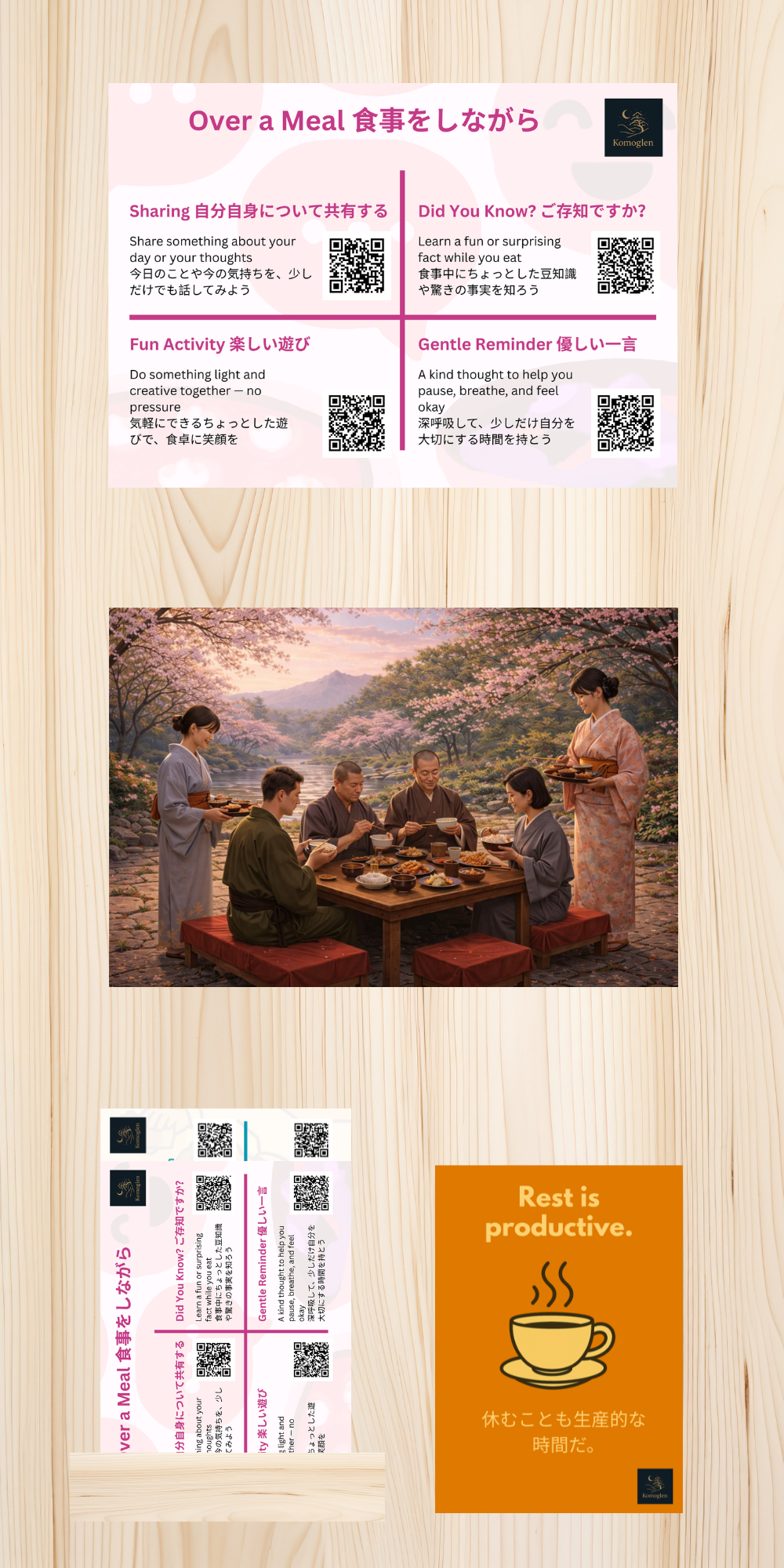
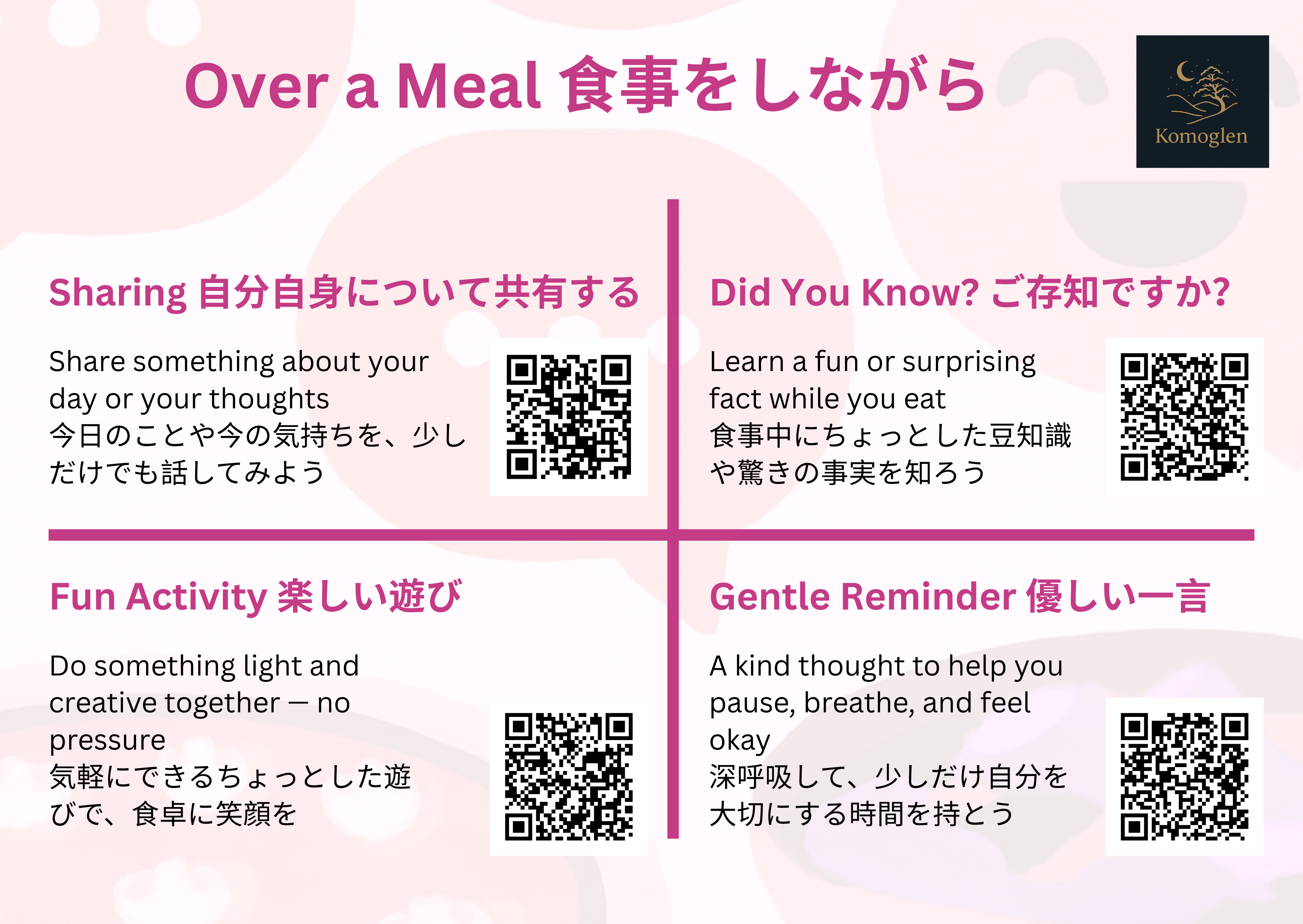
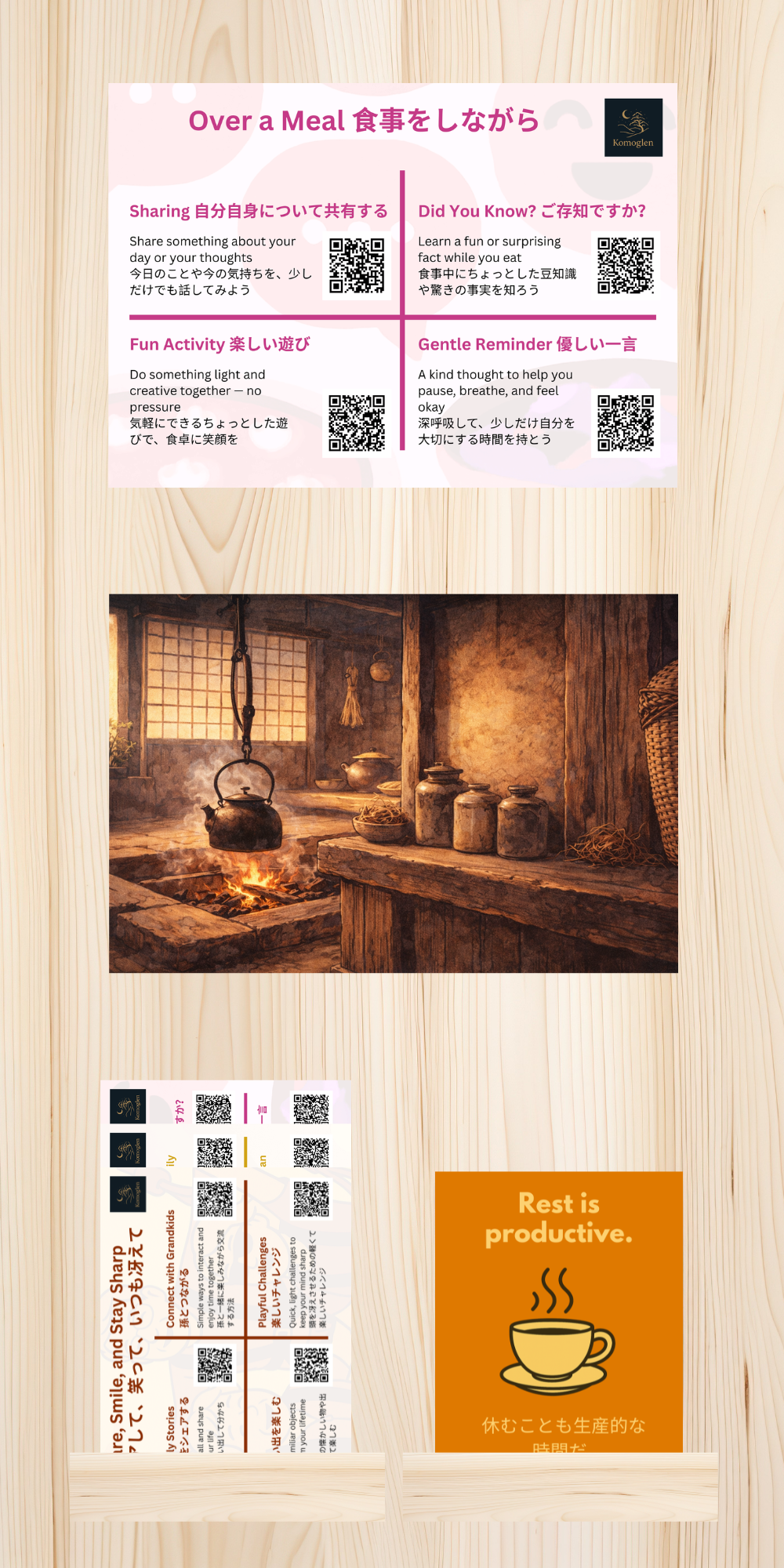
A card to access content that aims to make dinner time more communal and fun
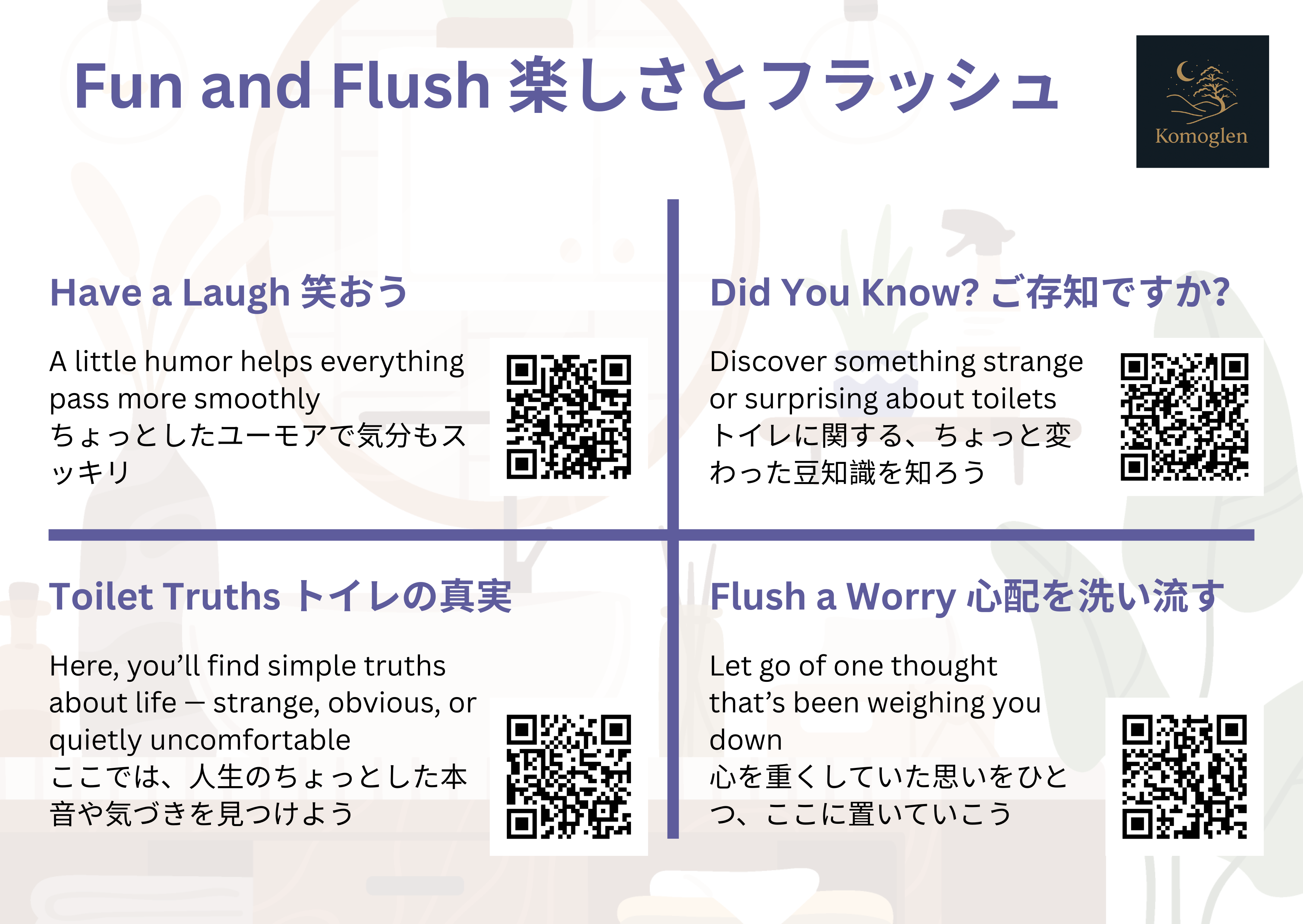
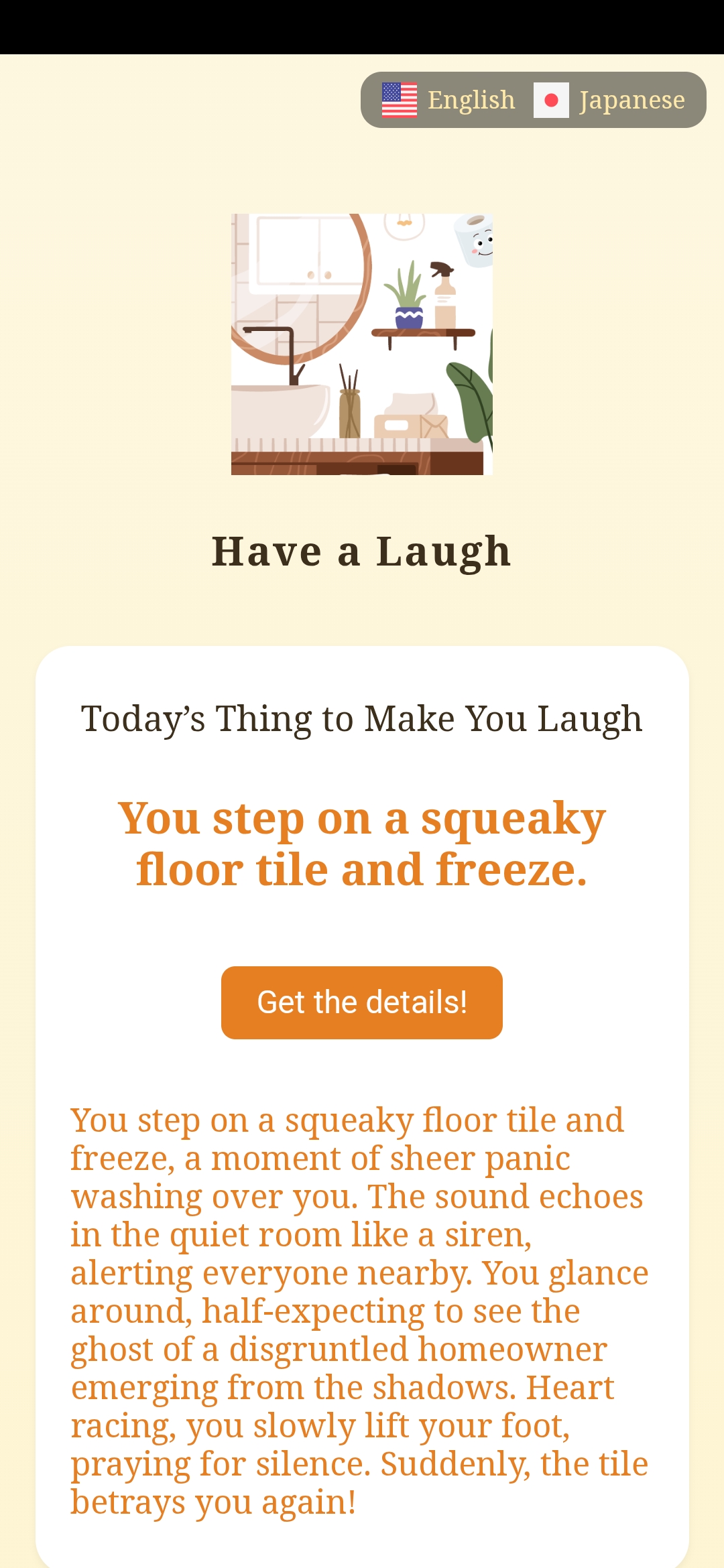
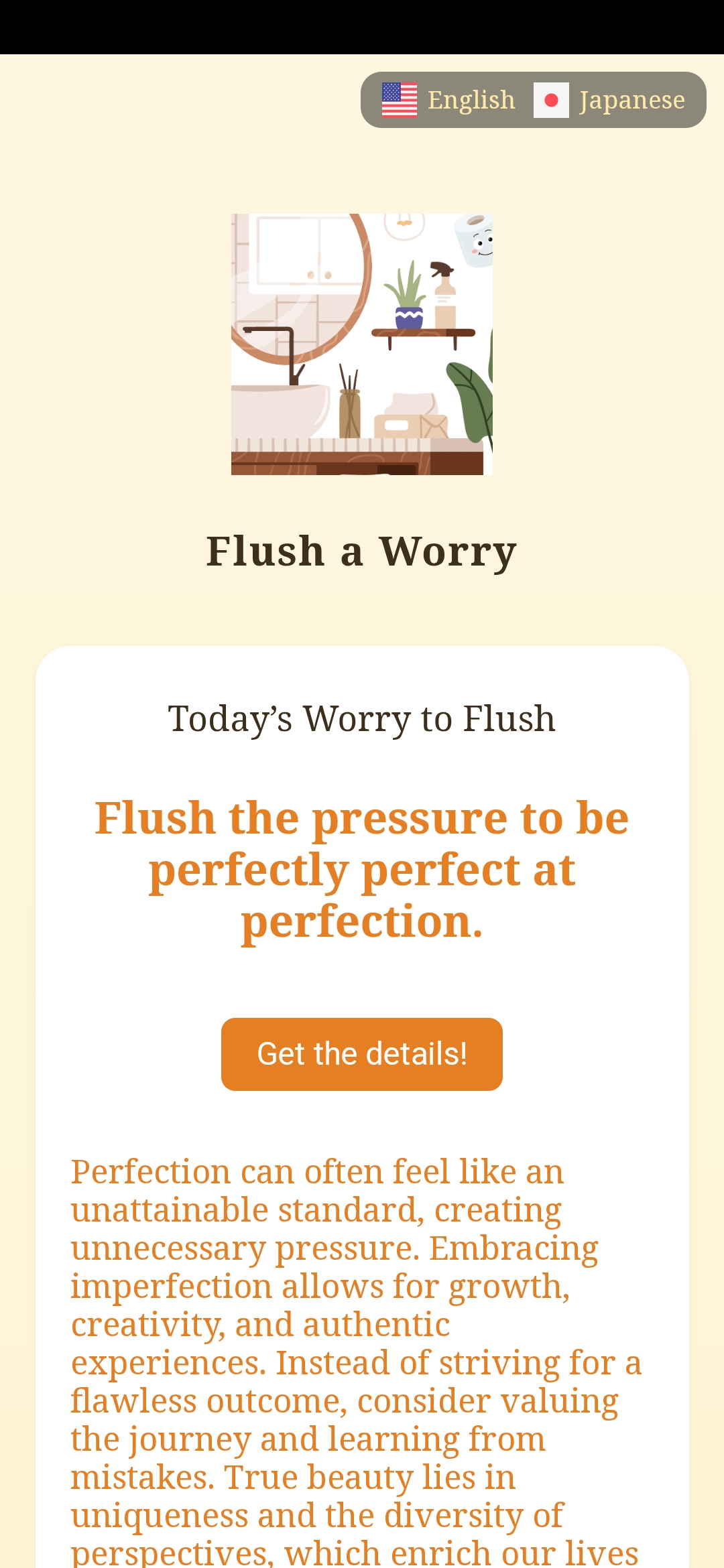
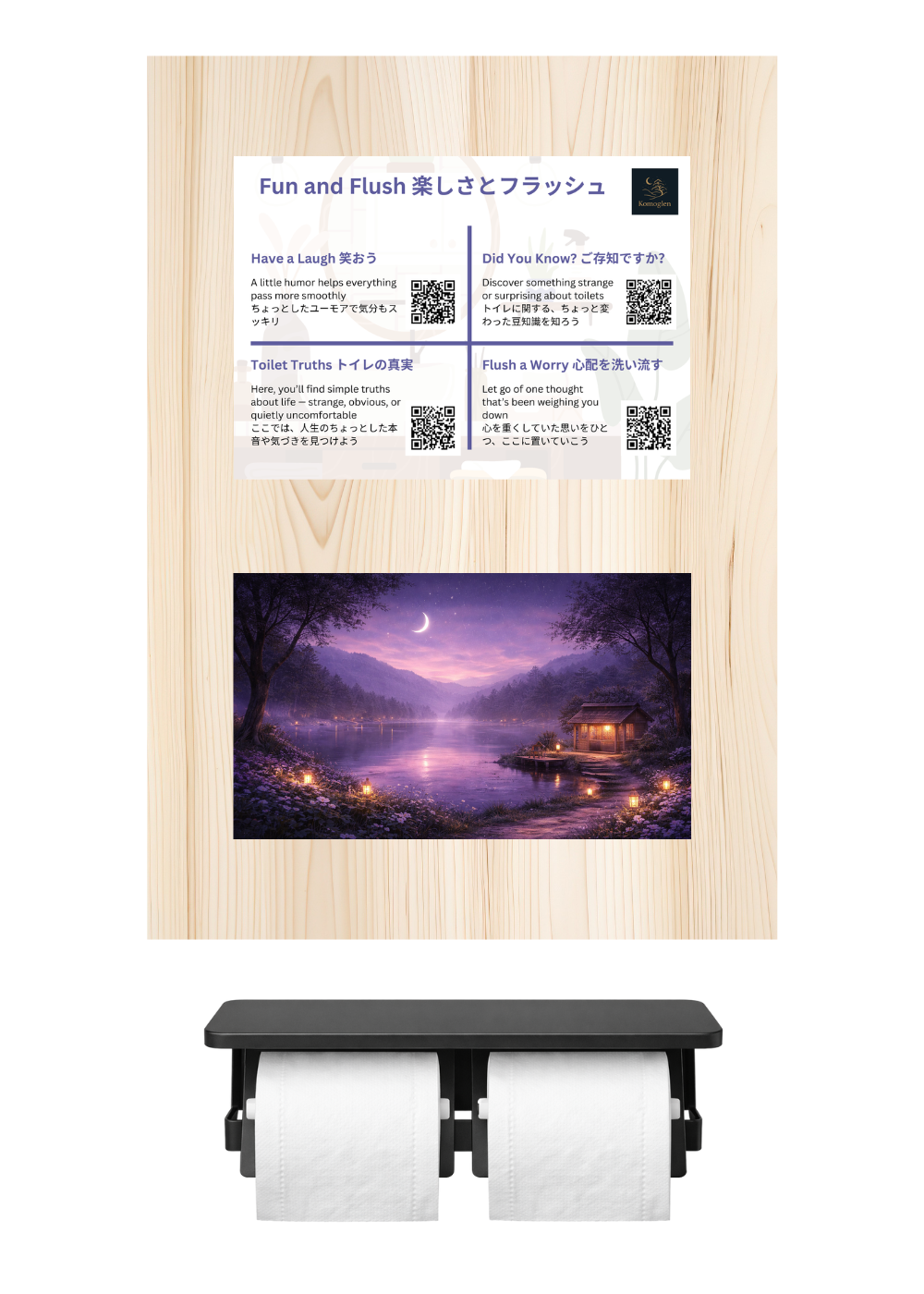
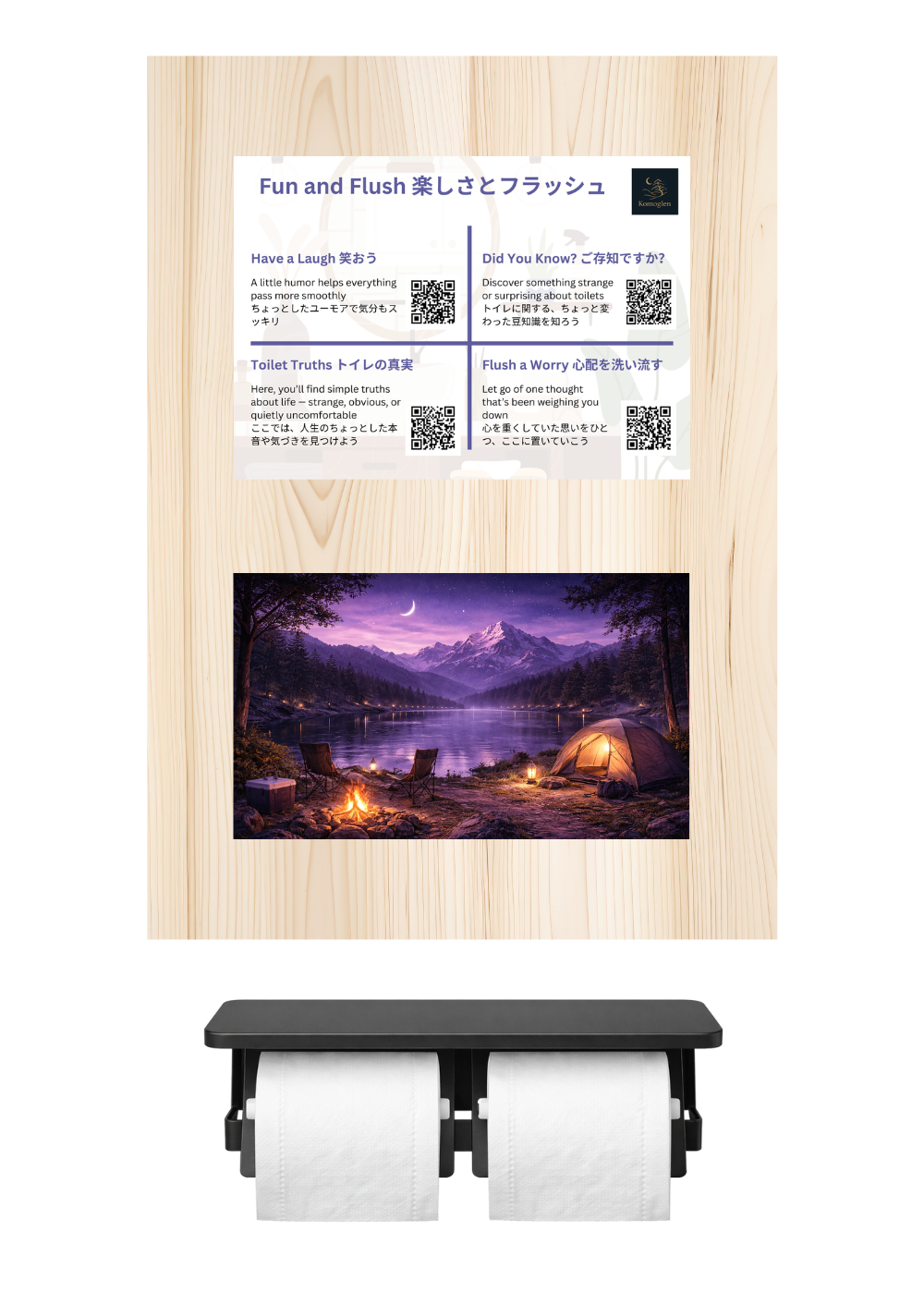
A card that can be used in the toilet to brighten your time spent in there
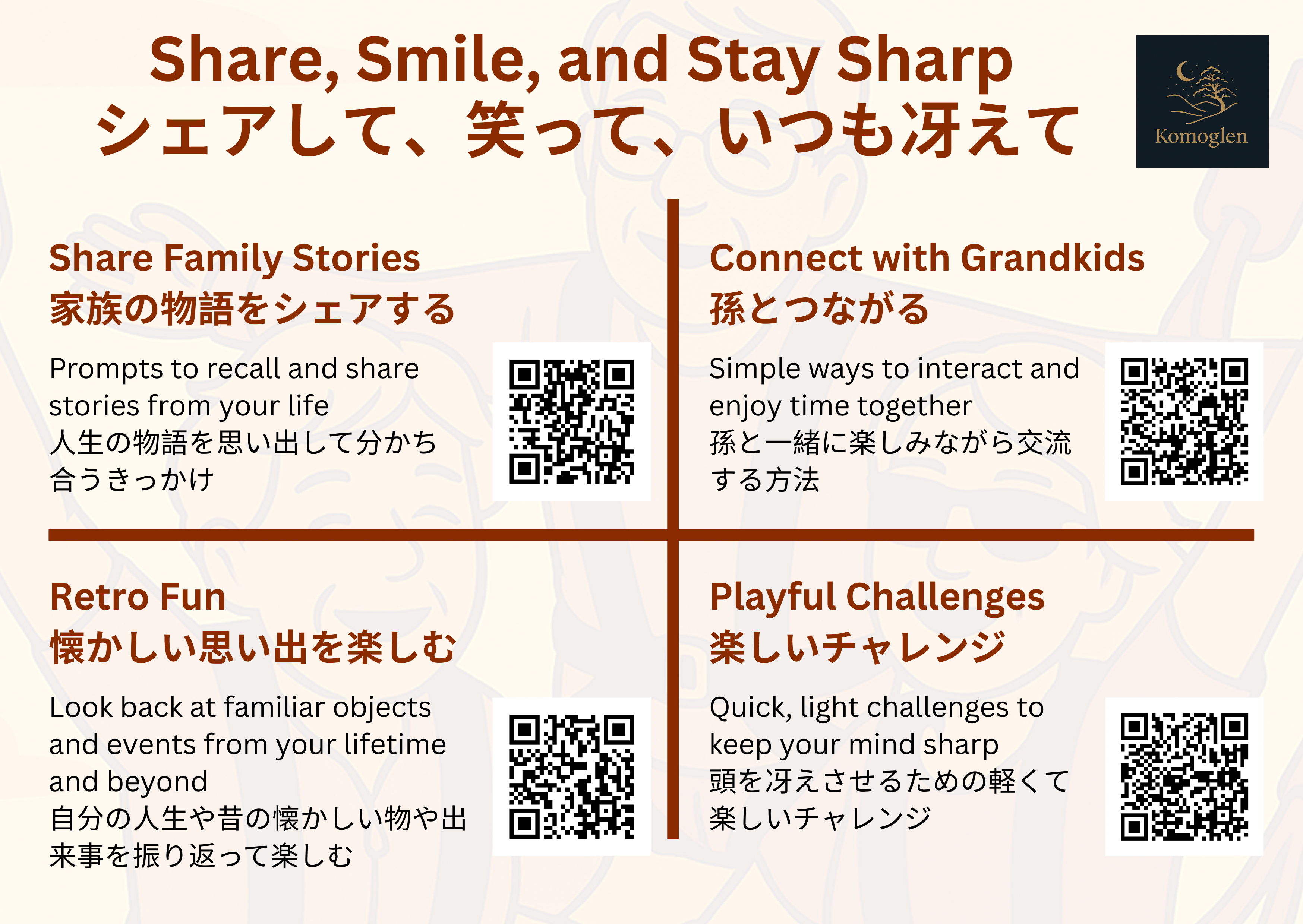
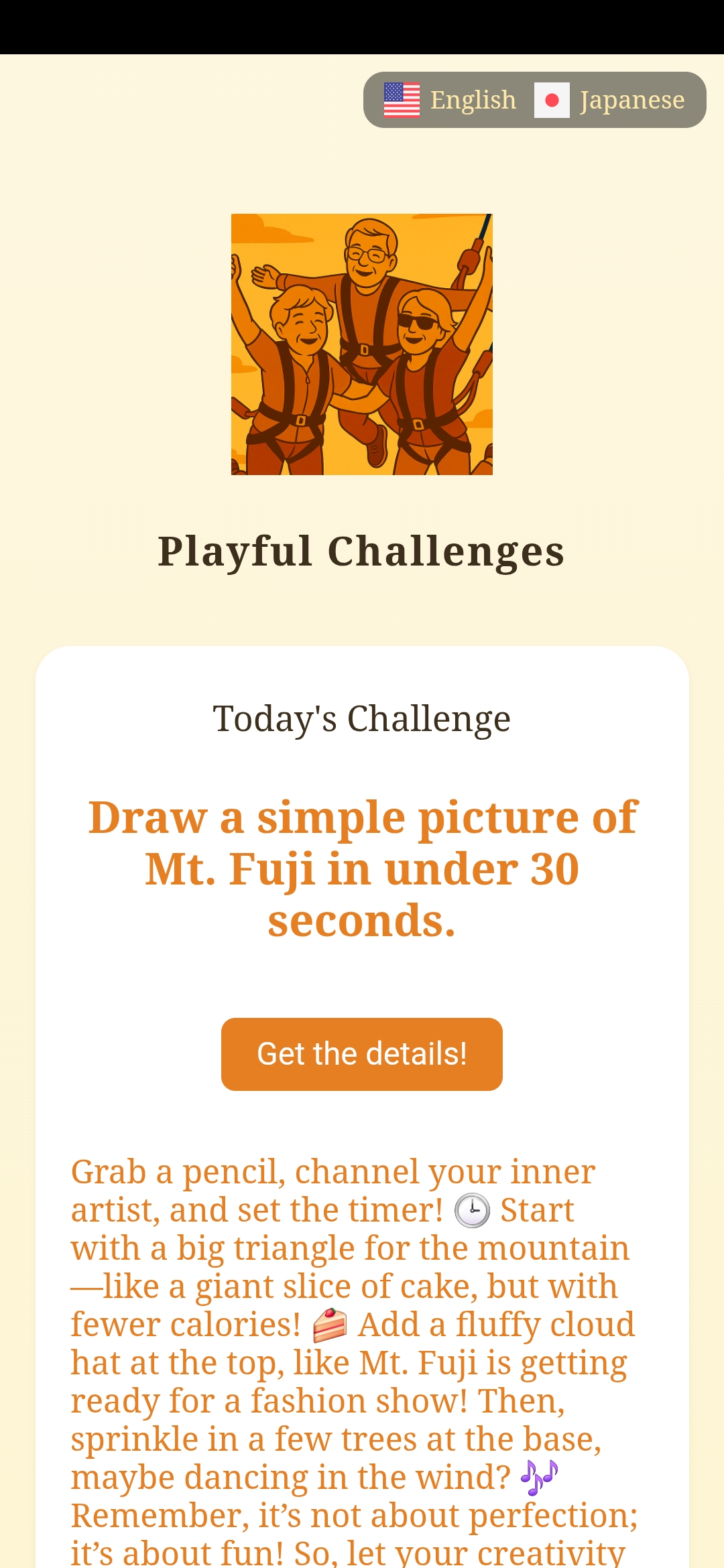
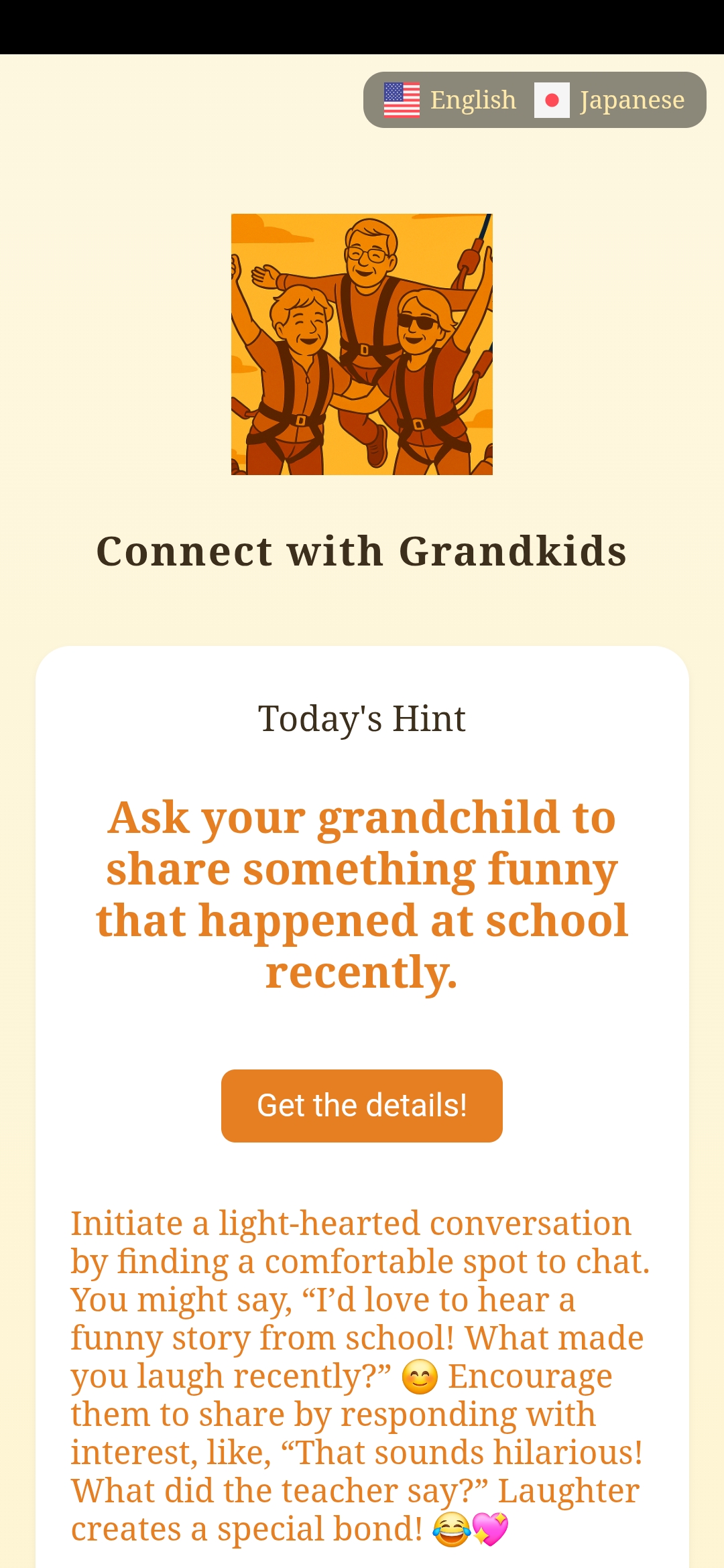
A card for retired people, with or without grandchildren, to use to share stories, enjoy smiles, and keep their minds sharp
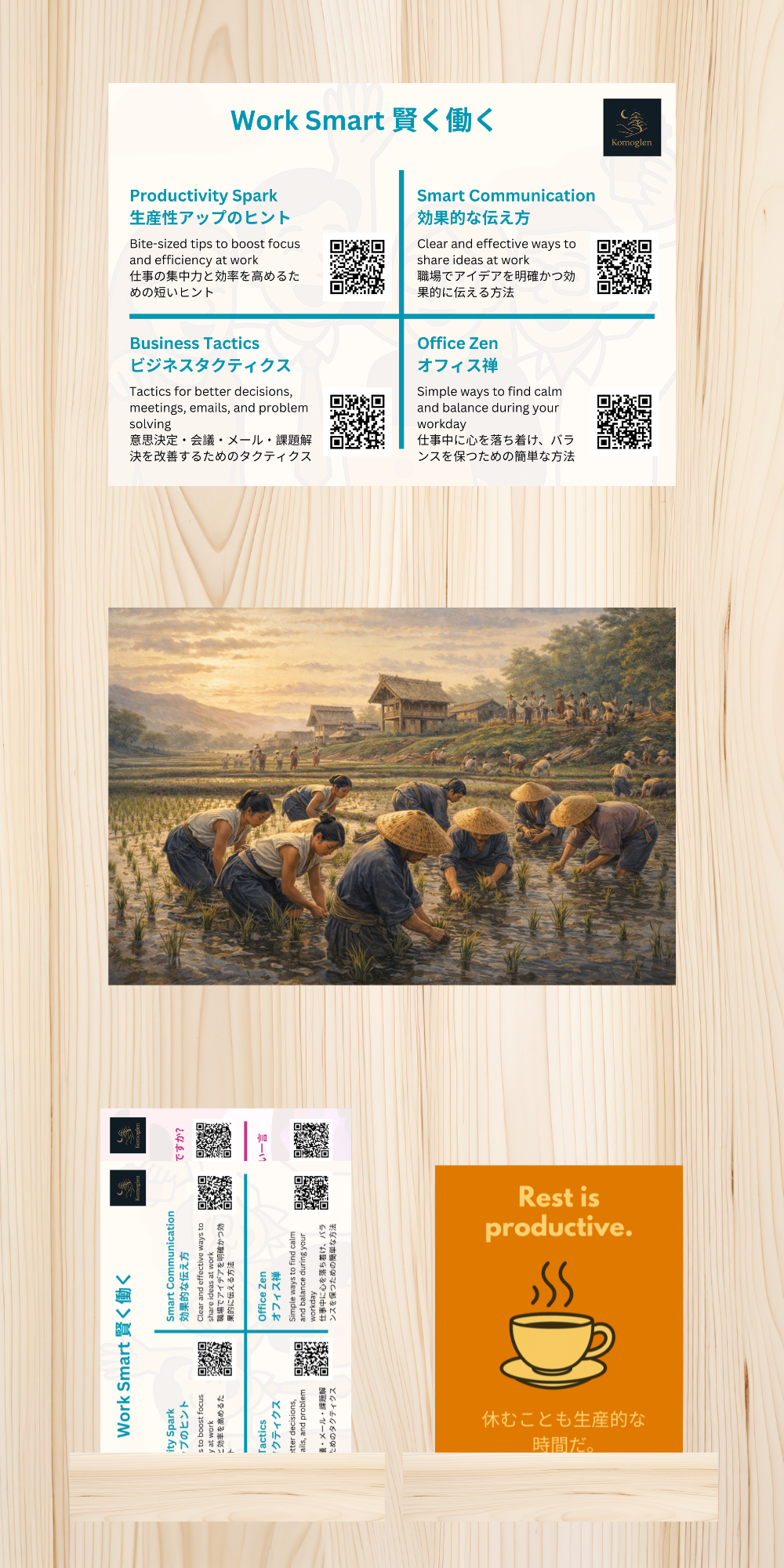
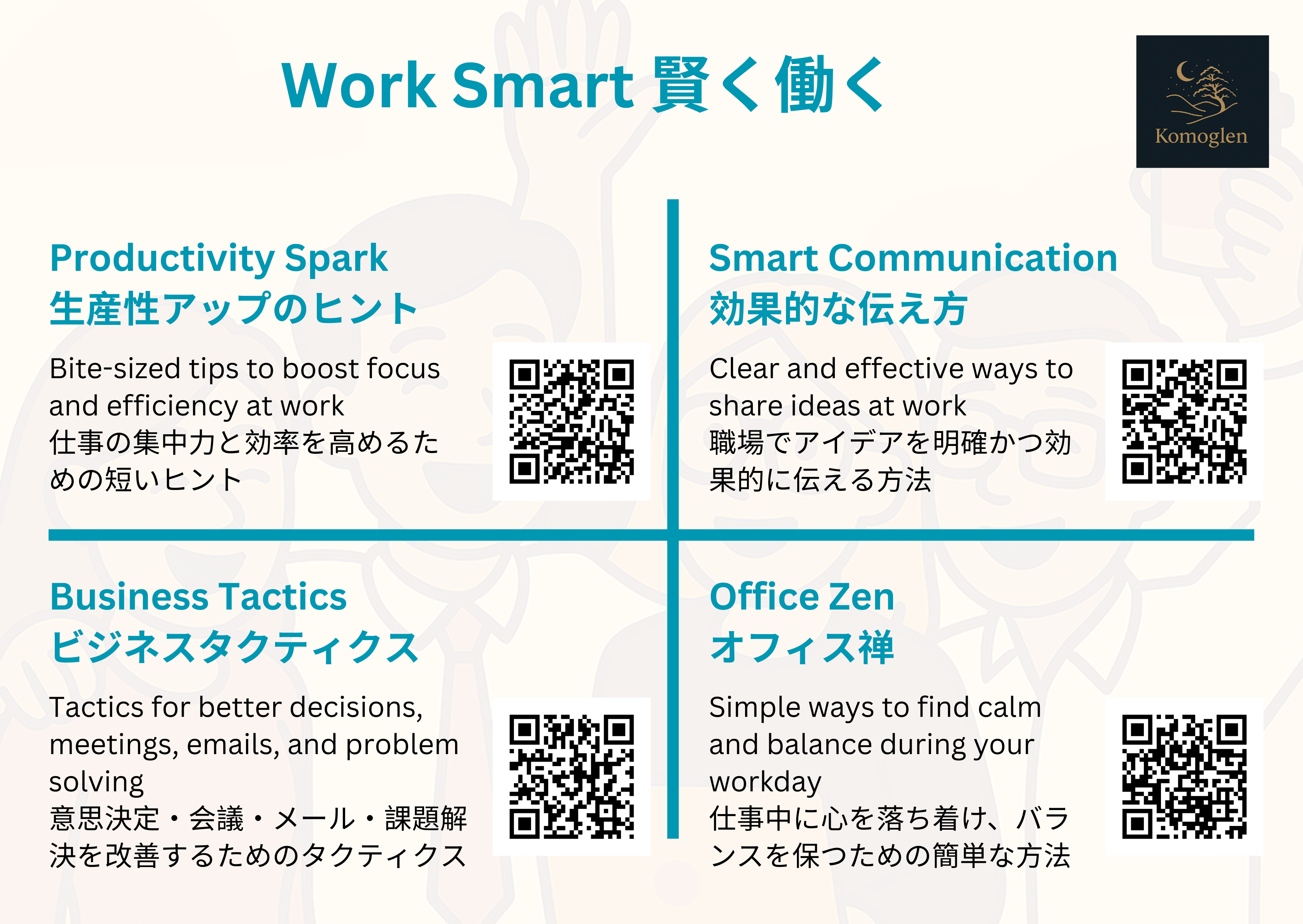
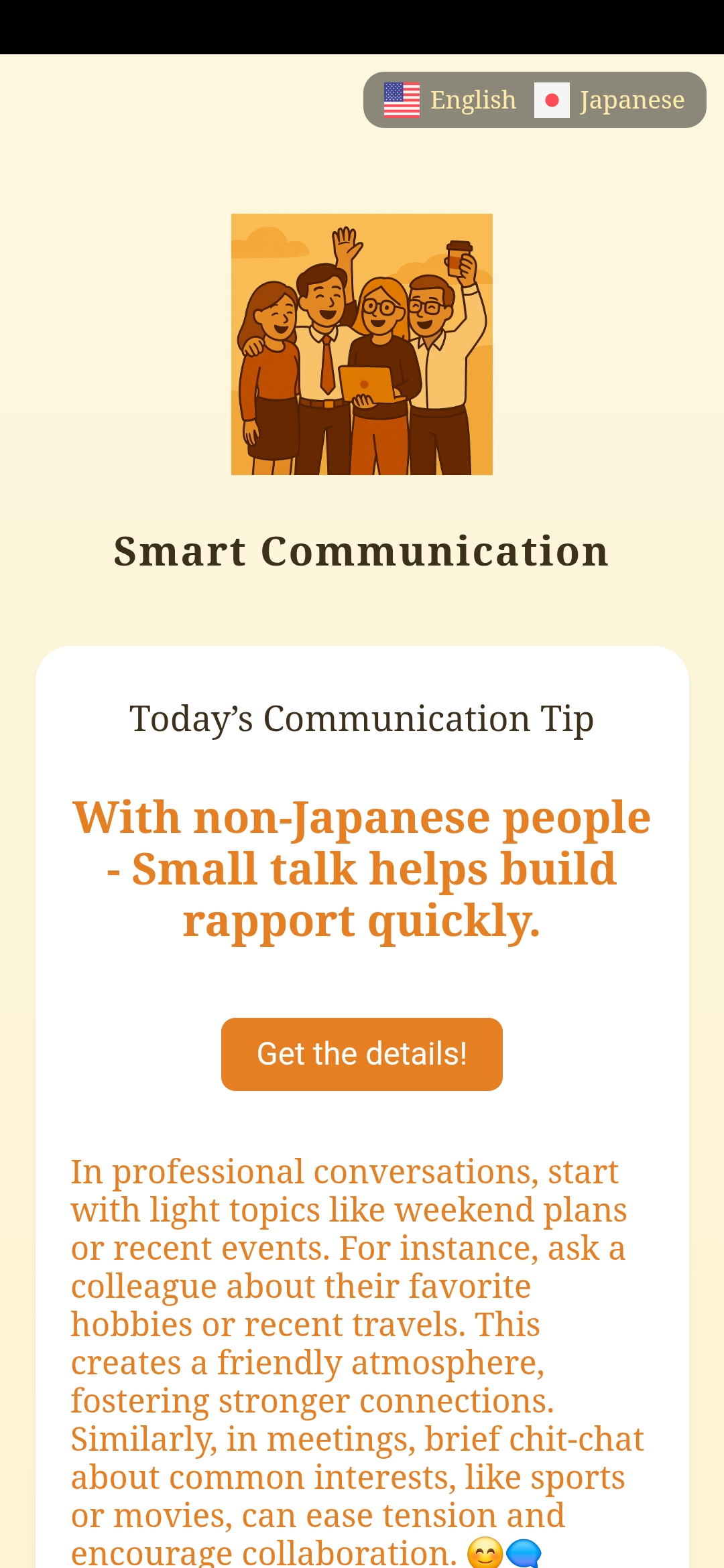
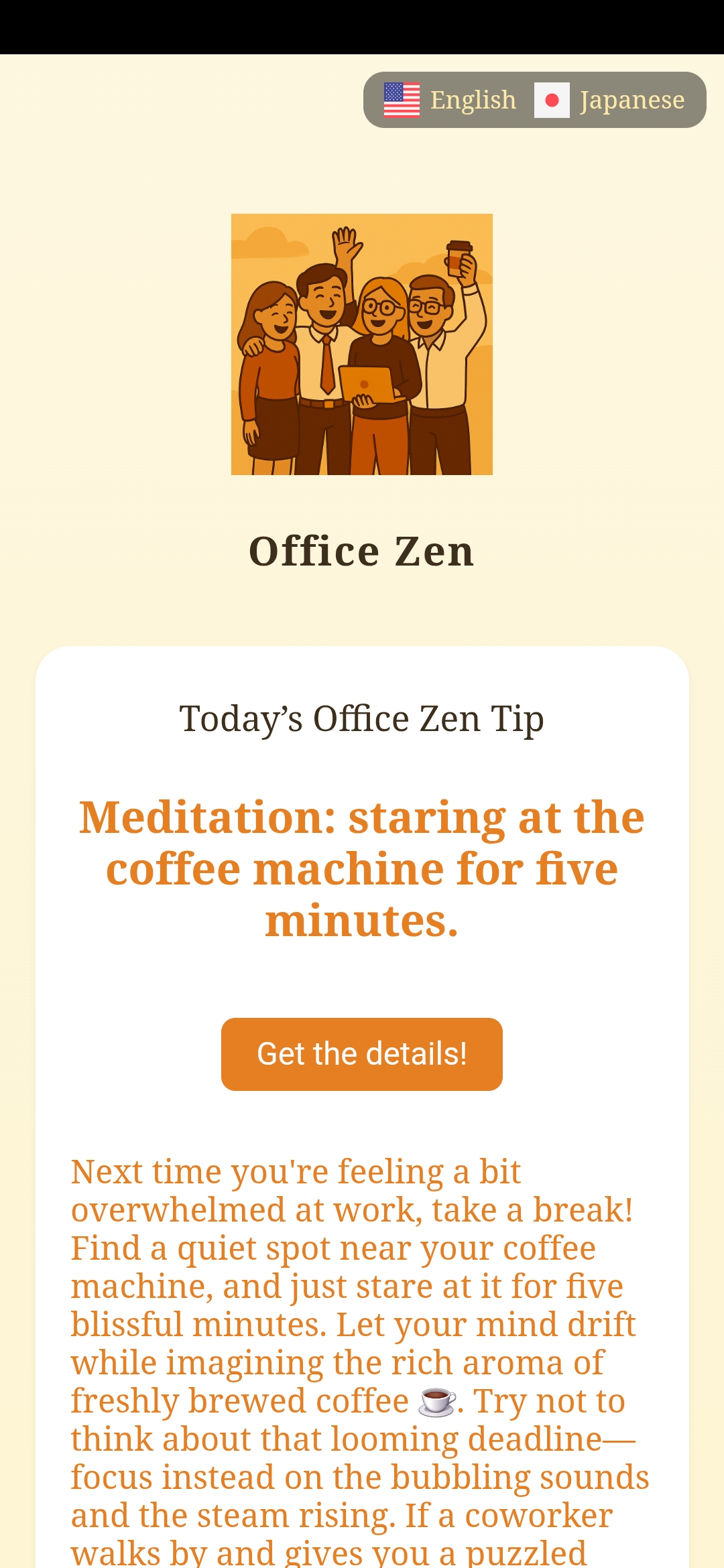
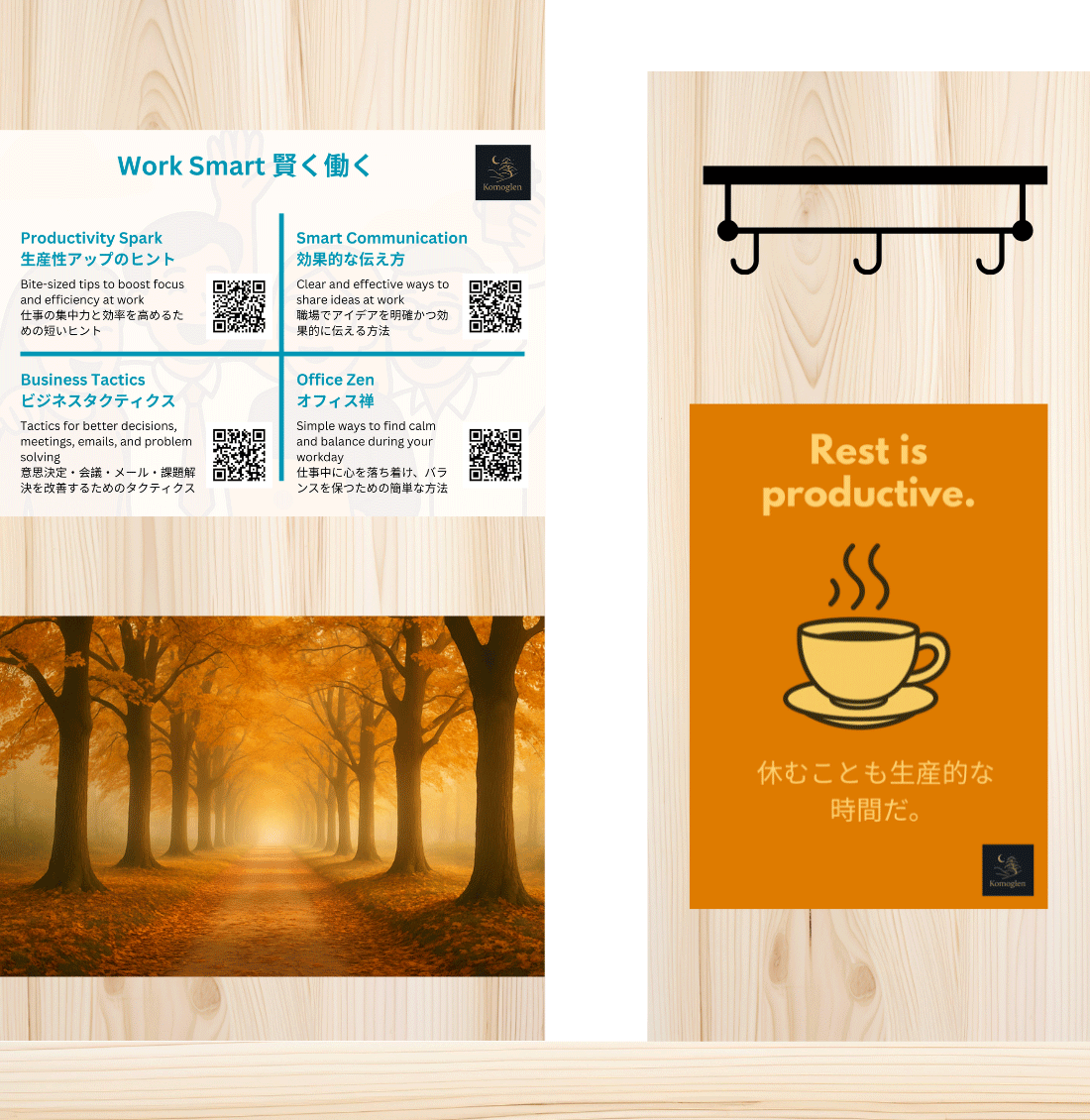
A card for business people to help them boost productivity, improve communication, make smarter decisions, and find balance at work
Cards for teen boys and teen girls
You can use the app for free.
Each card holder and card set is priced at
5,000 yen,
including tax and delivery.
✓
There is no need to sign up or subscribe. Just start using the app.
✓
Use of the app is anonymous. You may need to enter your email address and address if you make a purchase and need delivery. However, you can delete that information at a later date.
✓
You can choose what and how much detail to enter regarding your well-being. Anything you do enter is encrypted in our database.
Buy a wooden card holder for yourself or for someone important to you:
Give it as a gift for a teen child or a young adult who has just graduated university and is entering the workforce
It also makes a thoughtful gift for an employee or team member
It can be given as a Father's Day gift, a Mother's Day gift, or a gift for a grandparent
It is a meaningful way to help someone start the new year in the right way
It can also be a simple pick-me-up for someone who needs encouragement
It's the kind of gift that goes beyond the typical—it aims to bring a smile to their face and help them keep moving forward in life.
Giving Back Together
When you buy a Komoglen product, you’re not only investing in your own peace and growth — you’re also helping others.
About TELL Japan: TELL Japan is a non-profit organization that has been providing free, anonymous, and confidential support through its Lifeline for more than 50 years. They offer counseling and crisis support in English and Japanese, helping individuals in Japan who may be struggling with depression, anxiety, or suicidal thoughts.
For every product sold, Komoglen will donate 10% of the proceeds to TELL Japan.
We believe in transparency. A quarterly report of total donations to TELL Japan is published on our website so you can see the difference we are making together.
To make purchases, click the "Purchases" button on the main page.
If you have any concerns or questions, please contact: editor@komoglen.org
For Parents
Please note the following: this app is designed to be suitable for both teenagers and adults. All sections and content have been carefully curated to ensure appropriateness across all age groups. Additionally, all physical card content has been thoughtfully selected to suit users of all relevant age groups.
Details: Show/Hide
In the app, users can interact in two ways: (1) they can request a code from an existing friend and enter it to establish a connection with that friend inside the app; and (2) they can submit photos of their wooden card holder and post text-based comments on others’ photos. All uploaded photos are reviewed by Komoglen staff before being made visible to users. Comments and responses submitted by users are automatically reviewed by AI for appropriateness. If one is flagged as inappropriate, it is rejected, and the user is prompted to submit a more suitable comment/response.
Further, parents can enter a dedicated parental control section of the app by using a special password, allowing them to block their child’s access to specific sections, including those that allow interaction with other users. To be clear, users cannot engage in turn-by-turn chat with AI using this app.
More Details
Click a button below.
What We Provide
Komoglen provides a physical card system and a companion app designed to support everyday balance and self-regulation across different life stages.
Core Product Offering
Physical Cards Holder: A tangible system placed in everyday environments that quietly supports healthier choices through simple visual presence.
Each physical card includes a QR code that links to short digital content such as reflections, small games, practical ideas, or calming prompts, accessed only when the user chooses.
Companion App: Provides light games, puzzles, reflections, and practical strategies connected to physical and psychological health, shaped by user identity.
Target Audience and Inclusivity
Komoglen is designed to be inclusive and adaptable offering content that fits a wide range of personal situations and identities.
Teenagers, parents, workers, students, retired individuals, people in different relationship stages, the LGBTQ+ community, and others.
Psychological Foundation
We draw on established psychological ideas such as nudging affordances and resilience as a process to turn complex theory into practical low pressure tools that support autonomy and positive adaptation.
The Komoglen System: A Science-Backed Approach
The Komoglen (KG) system is built upon established psychological research to provide a simple, effective, and flexible approach to everyday balance and self-regulation. It translates complex academic theories into practical tools for daily life.
At its core, Komoglen is designed to work with how your brain naturally operates, not against it. It acknowledges that human attention is a limited resource and provides support that is both accessible and respectful of your personal control.
1. Managing Emotions and Attention
The system supports the deliberate management of your feelings and focus, drawing on established principles:
Emotion Regulation (James J. Gross): KG helps you manage emotional responses using core strategies such as:
Changing the situation (e.g., picking a card that suggests a walk).
Shifting your attention (the physical card acts as a distraction).
Adjusting your thoughts (re-framing a challenge).
Modulating your physical response (simple prompts to breathe or pause).
Limited Attention (Daniel Kahneman): Acknowledging that attention is a limited resource, KG reduces cognitive load by using simple, salient environmental cues (the card holder) rather than demanding push notifications or complex apps.
2. Guiding Behavior and Motivation
Komoglen uses subtle design cues to encourage healthier habits while giving you full control:
Self-Regulation (Carver & Scheier): The system supports your natural goal-tracking by providing reflective prompts that help you compare where you are now with where you want to be, enabling adaptive strategy selection.
Nudging and Choice Architecture (Thaler & Sunstein): The physical presence of the Komoglen holder subtly shifts your environment ("choice architecture") to make positive thoughts and actions easier to notice. This is a gentle "nudge" that guides you toward well-being without obligation or pressure.
Embodied and Situated Cognition (Lawrence Barsalou): By physically interacting with the cards in your daily environment, you ground the ideas in your specific situation, making them more impactful than abstract information.
3. Resilience and the Right to Disengage
KG is designed to remain available as latent support when needed, understanding that permanent non-use is an expected, psychologically neutral outcome:
Resilience as a Process (Masten, Luthar, Bonanno): Resilience is viewed as a dynamic capacity to adapt, not a fixed trait. KG operationalizes this by offering low-effort, optional strategies that support gradual adjustment without rigid expectations.
Autonomy and Non-Use (Deci & Ryan; Donald Norman): You are in control. The product’s affordances may remain dormant until context makes them relevant. Choosing not to engage is a valid way to preserve your sense of autonomy, and the system is designed to respect that choice fully.
References
Barsalou, L. W. (2008). Grounded cognition. Annual Review of Psychology, 59, 617–645.
Bonanno, G. A. (2004). Loss, trauma, and human resilience: Have we underestimated the human capacity to thrive after extremely aversive events? American Psychologist, 59(1), 20–28.
Carver, C. S., & Scheier, M. F. (1998). On the self-regulation of behavior. Cambridge University Press.
Deci, E. L., & Ryan, R. M. (2000). Self-determination theory and the facilitation of intrinsic motivation, social development, and well-being. American Psychologist, 55(1), 68–78.
Gross, J. J. (1998). The emerging field of emotion regulation: An integrative review. Review of General Psychology, 2(3), 271–299.
Gross, J. J. (Ed.). (2015). Handbook of emotion regulation (2nd ed.). Guilford Press.
Kahneman, D. (1973). Attention and effort. Prentice-Hall.
Luthar, S. S., Cicchetti, D., & Becker, B. (2000). The construct of resilience: A critical evaluation and guidelines for future work. Child Development, 71(3), 543–562.
Masten, A. S. (2001). Ordinary magic: Resilience processes in development. American Psychologist, 56(3), 227–238.
Norman, D. A. (1988). The psychology of everyday things. Basic Books.
Thaler, R. H., & Sunstein, C. R. (2008). Nudge: Improving decisions about health, wealth, and happiness. Yale University Press.






 English
 Japanese
.png)
.png)
.png)
.png)
.png)